
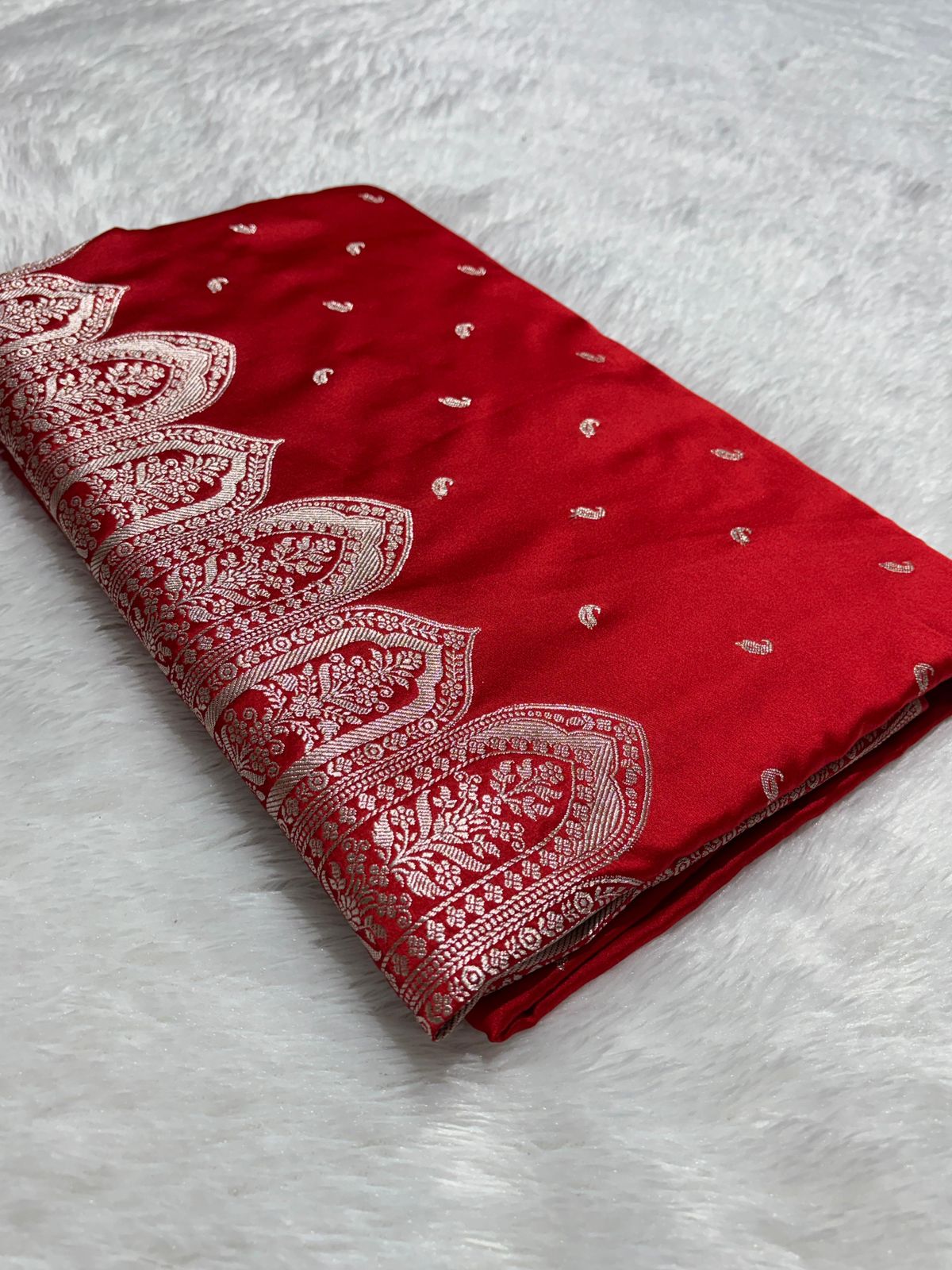
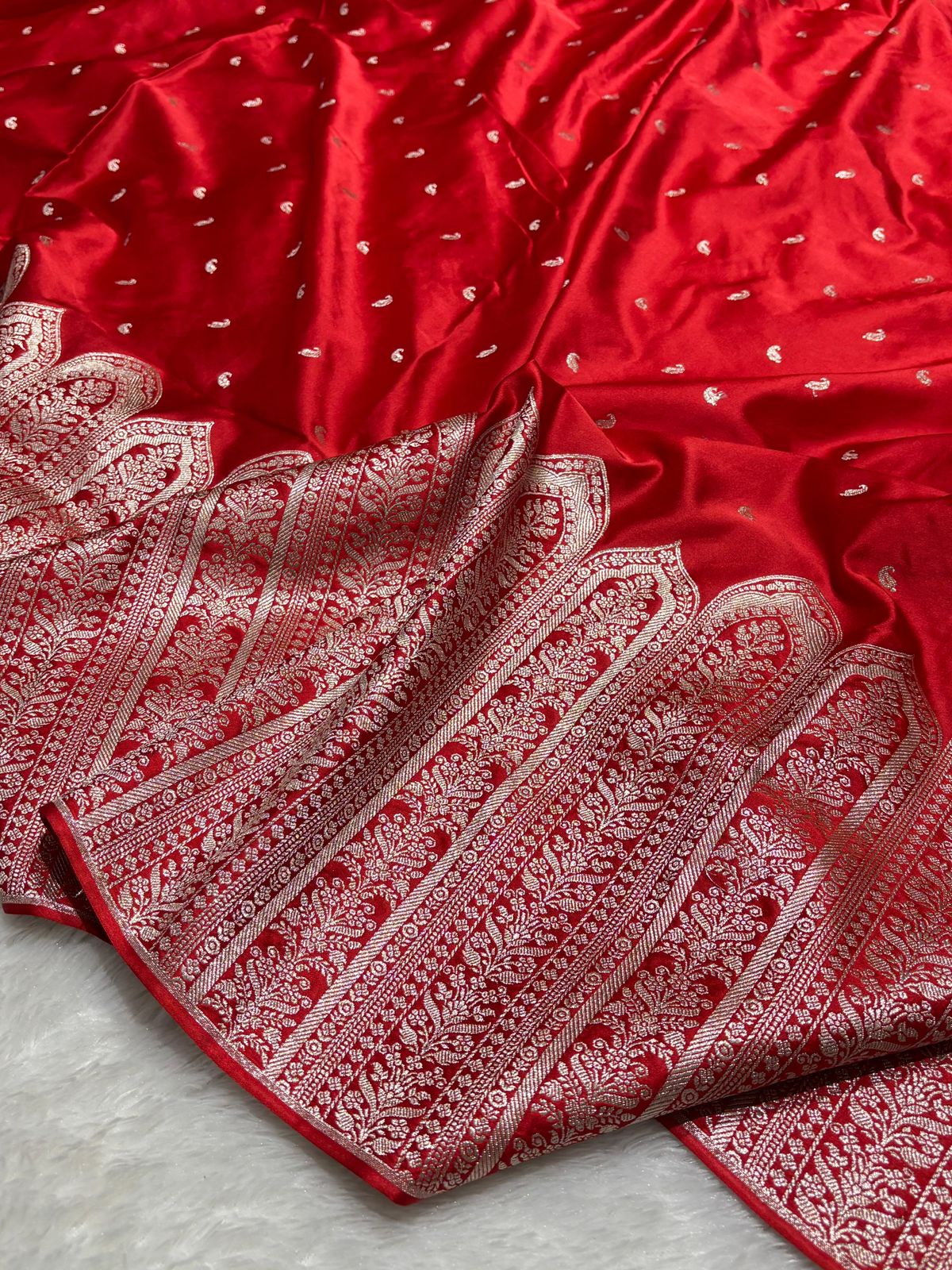
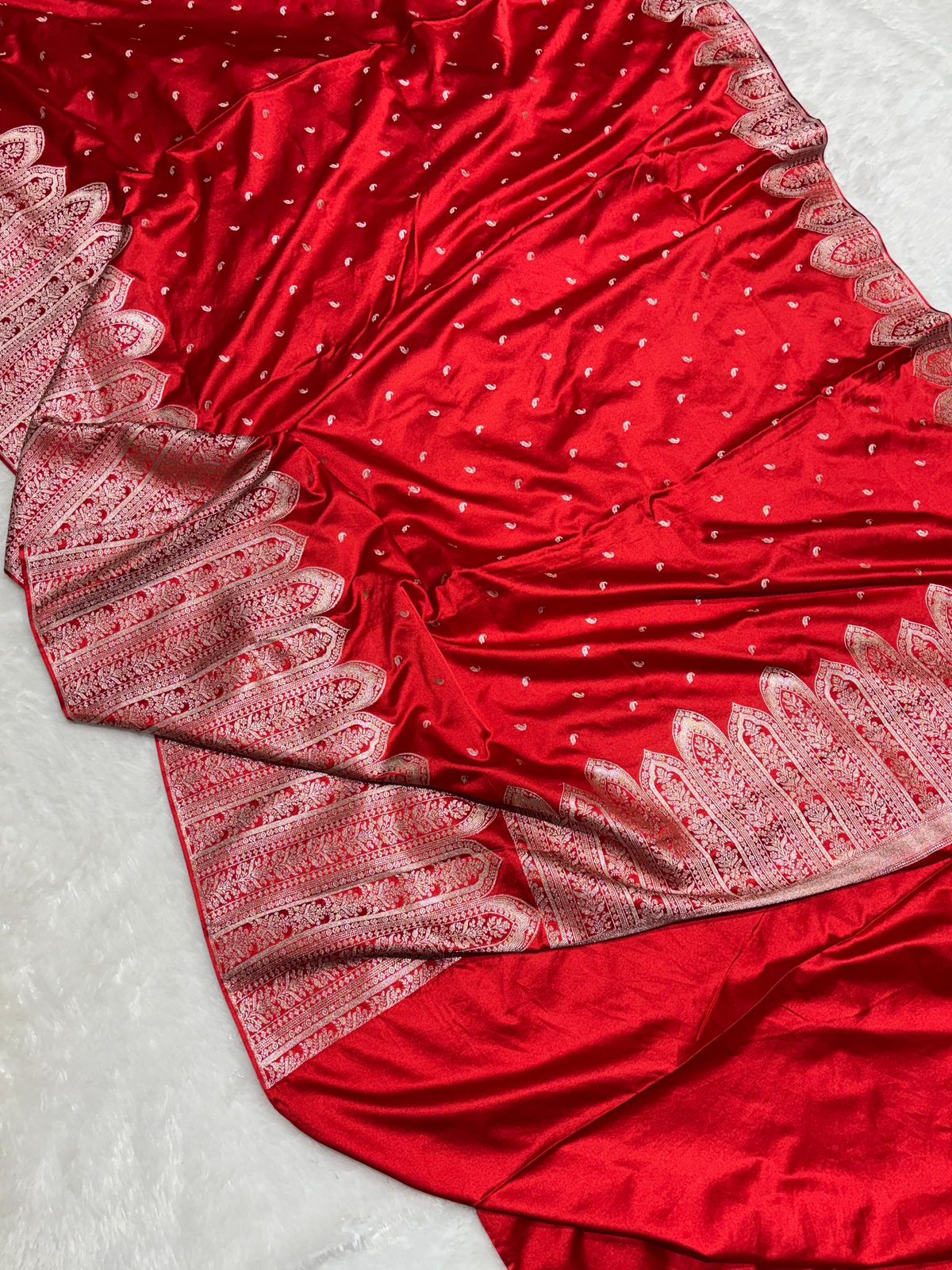
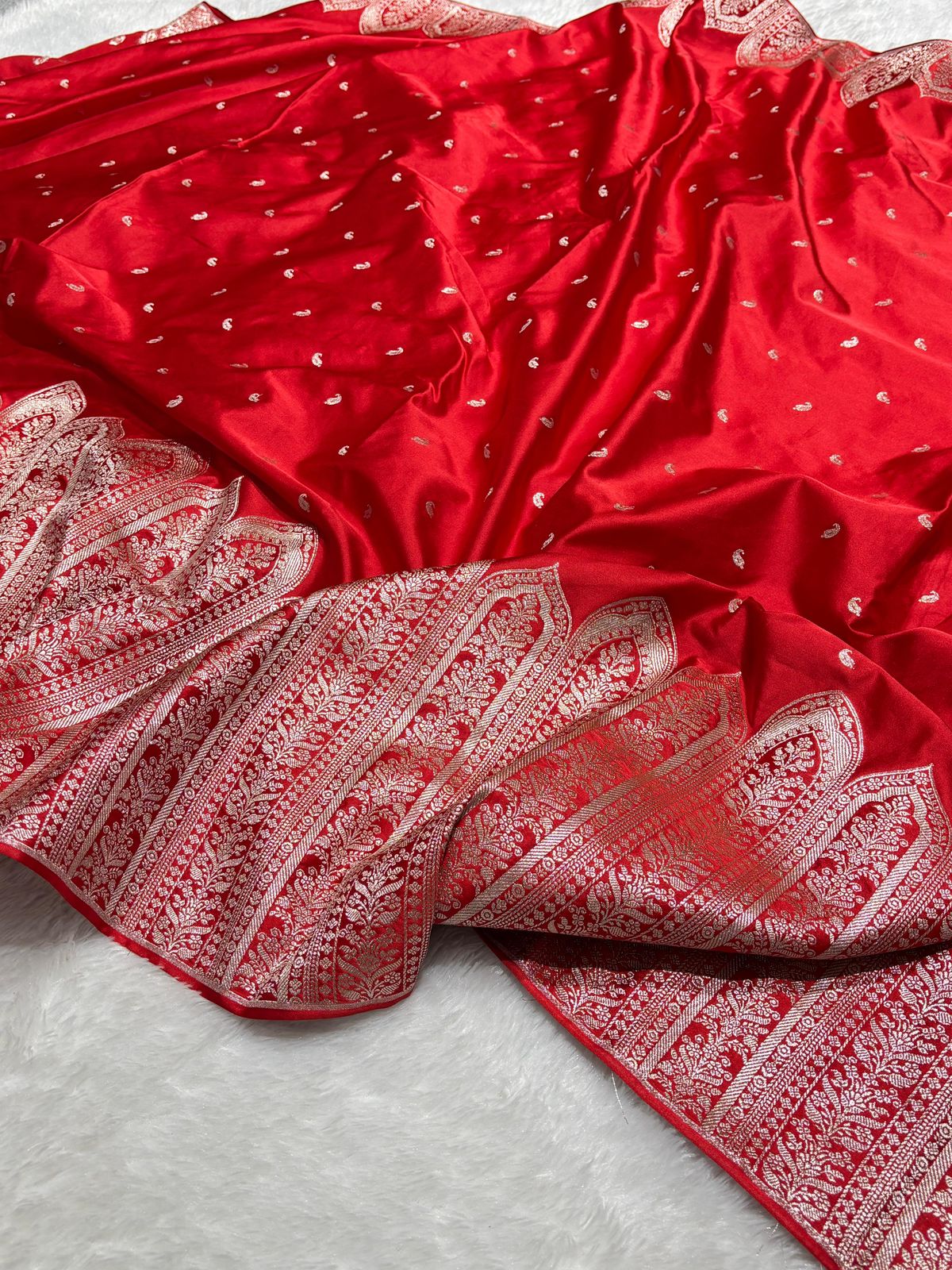
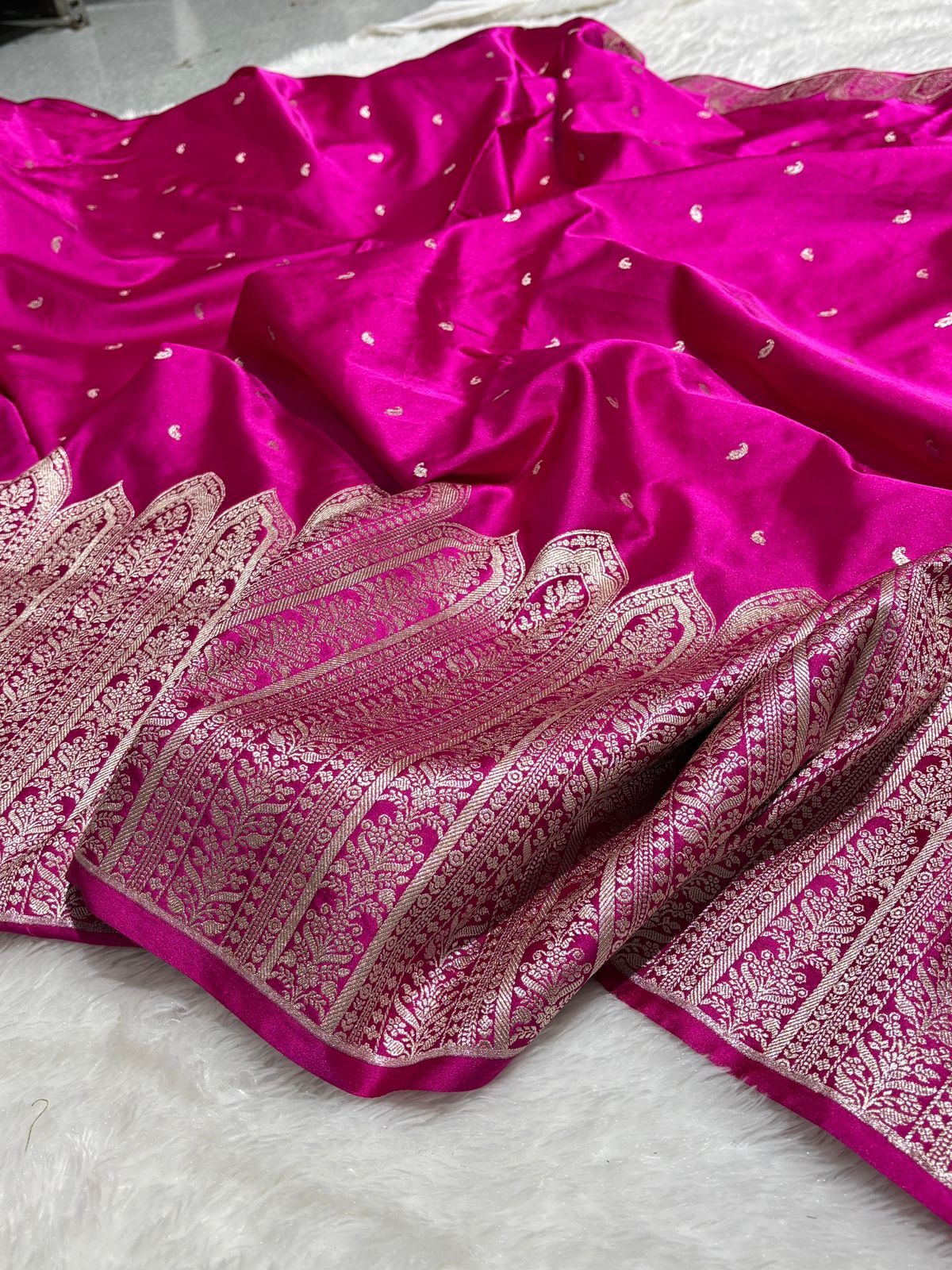
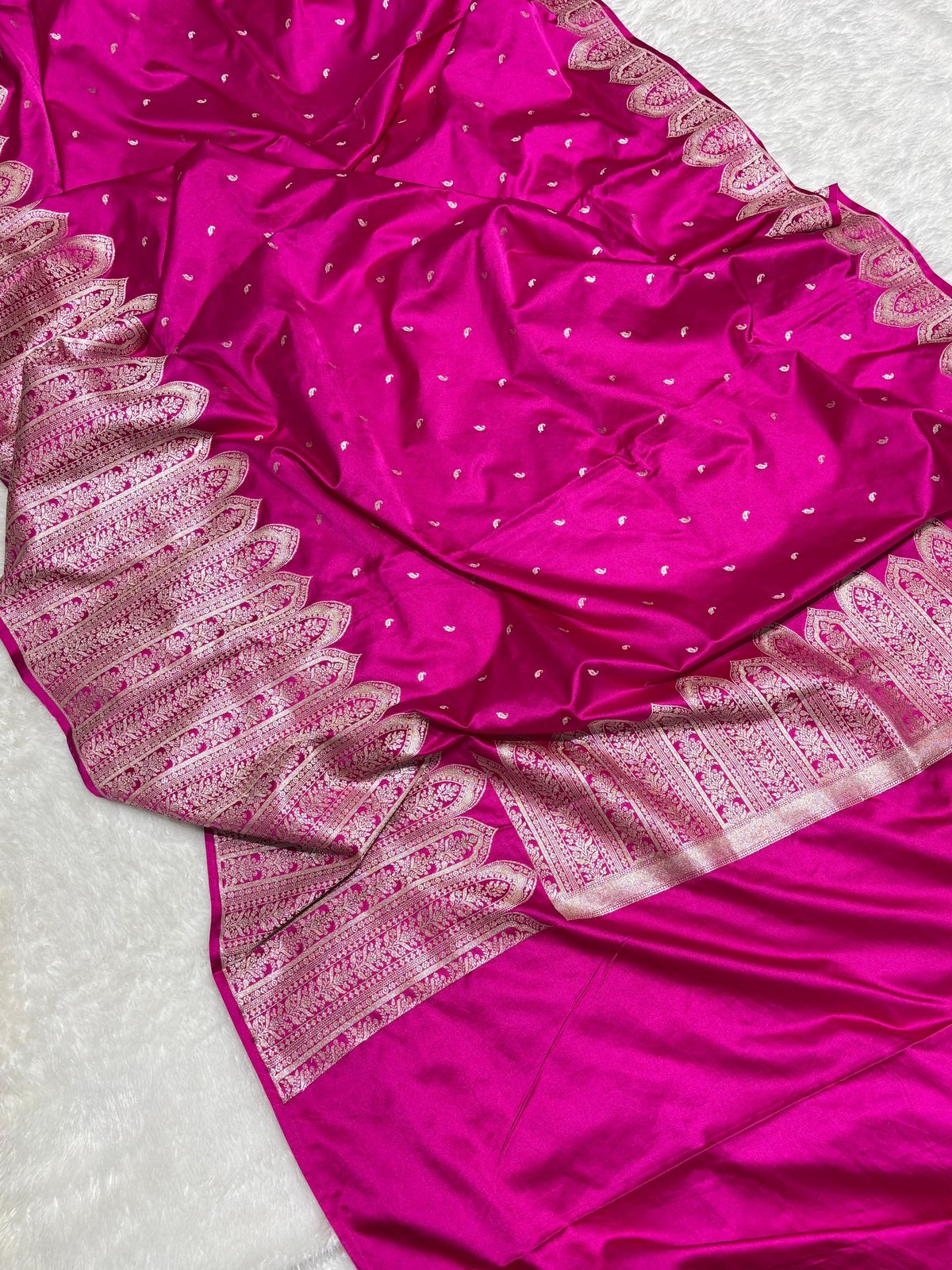
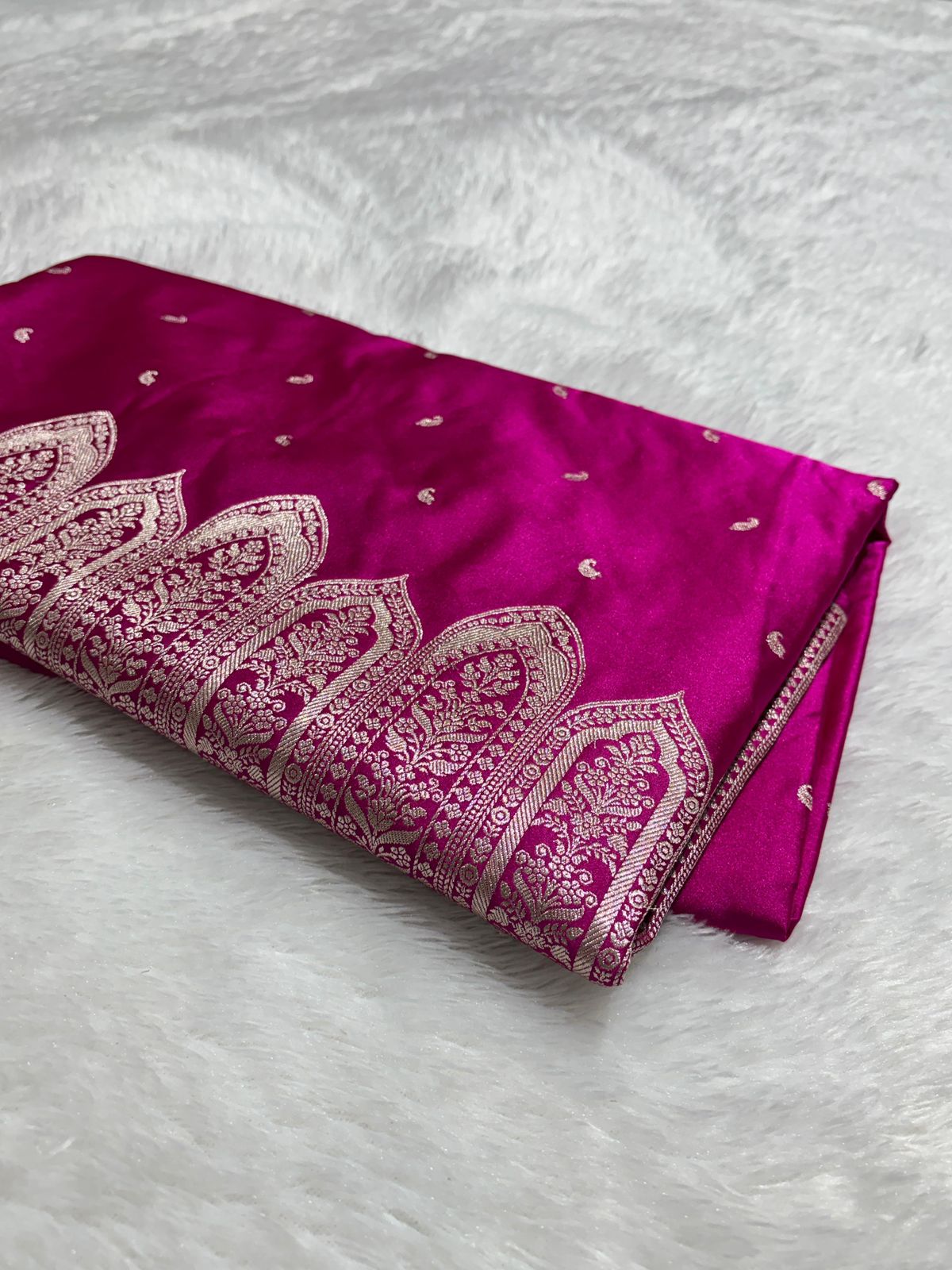
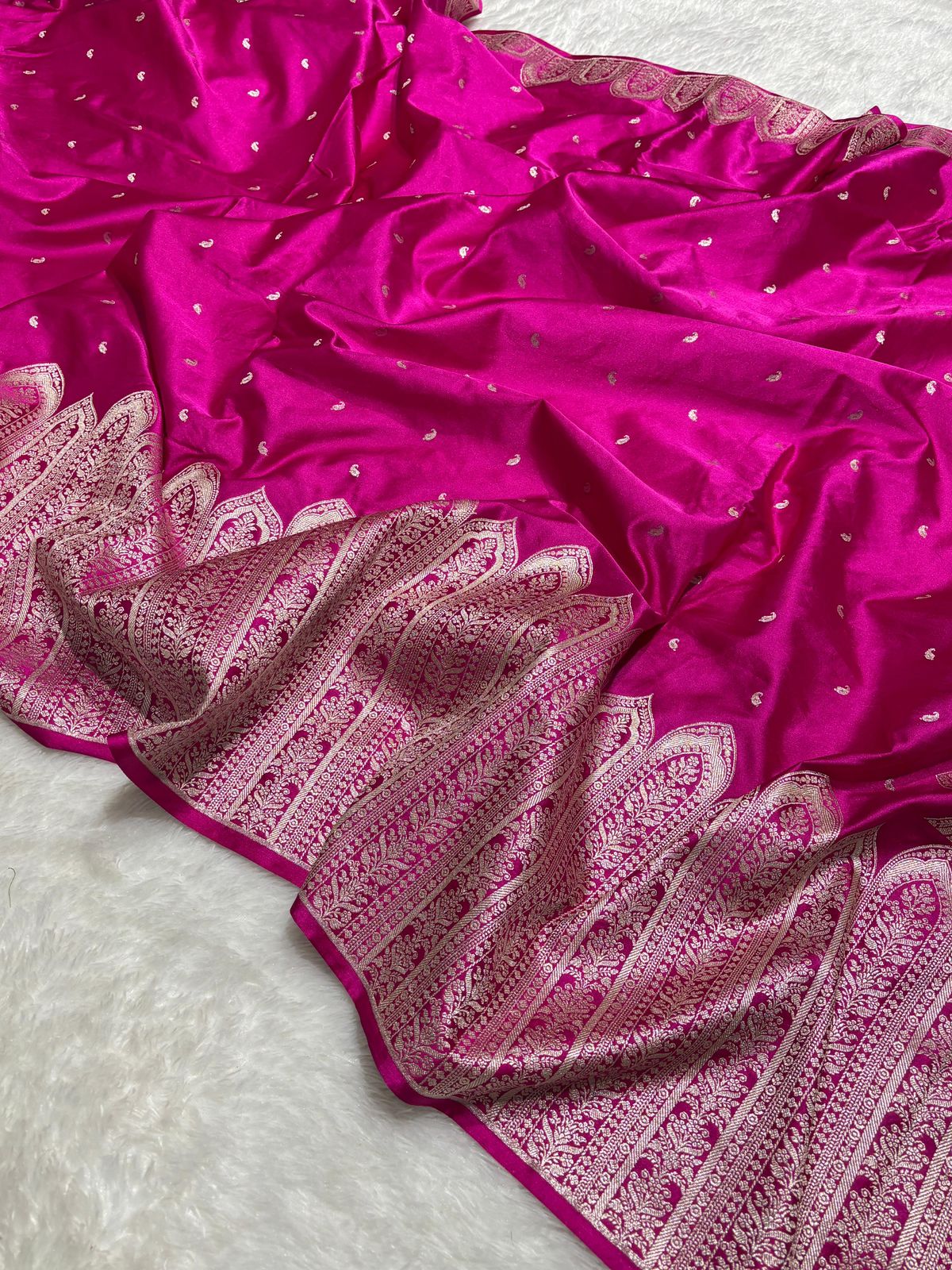
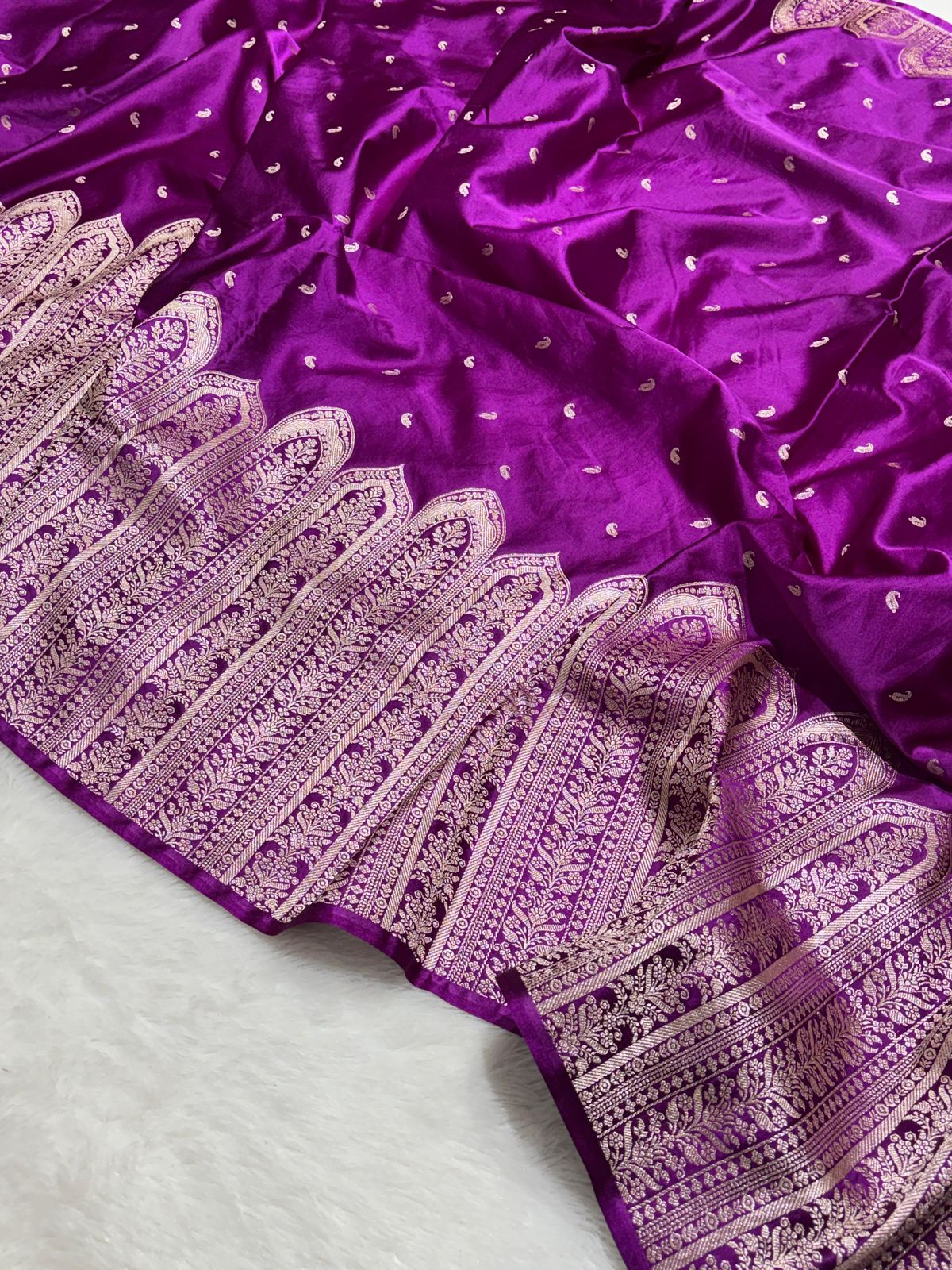
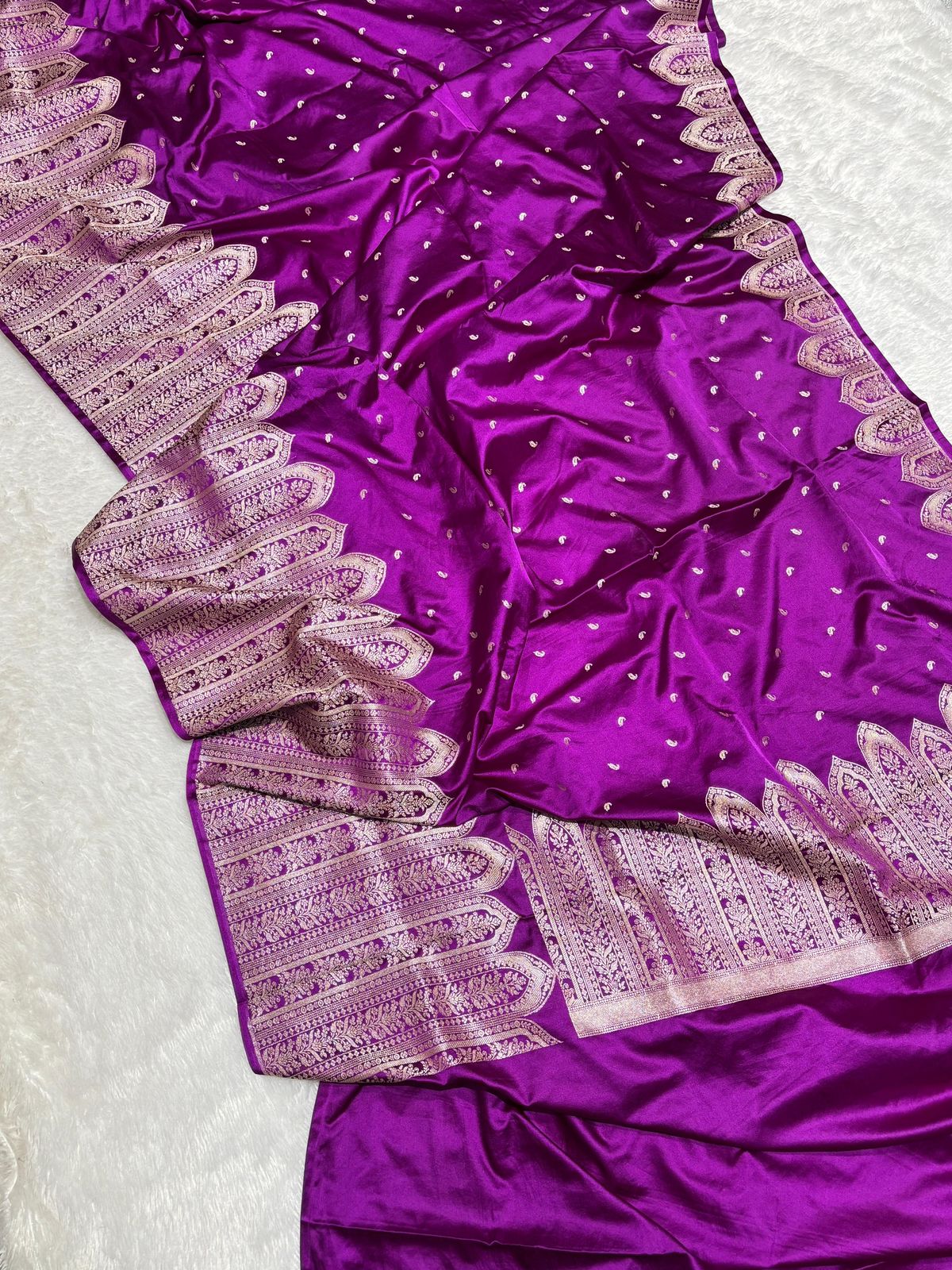
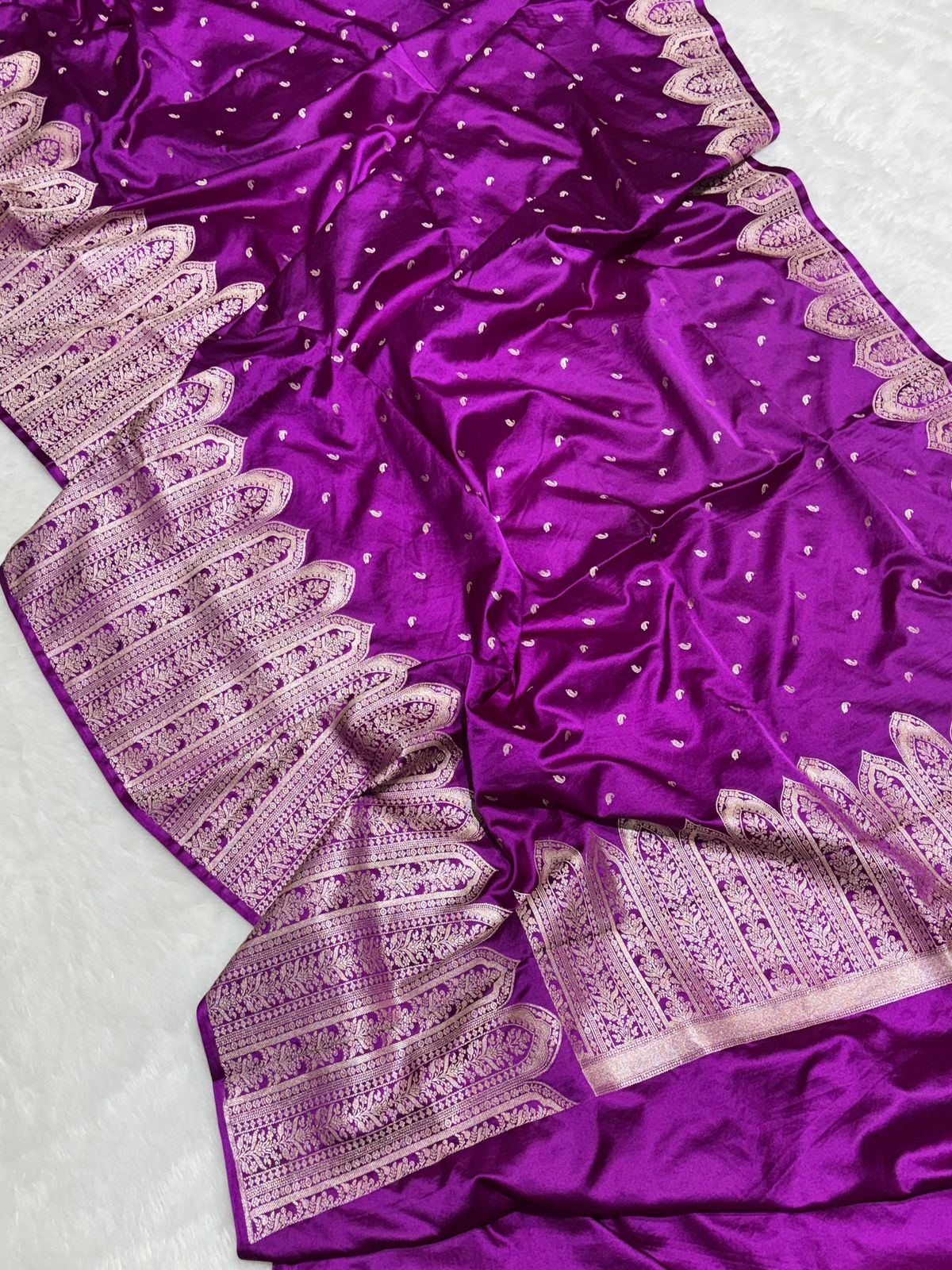
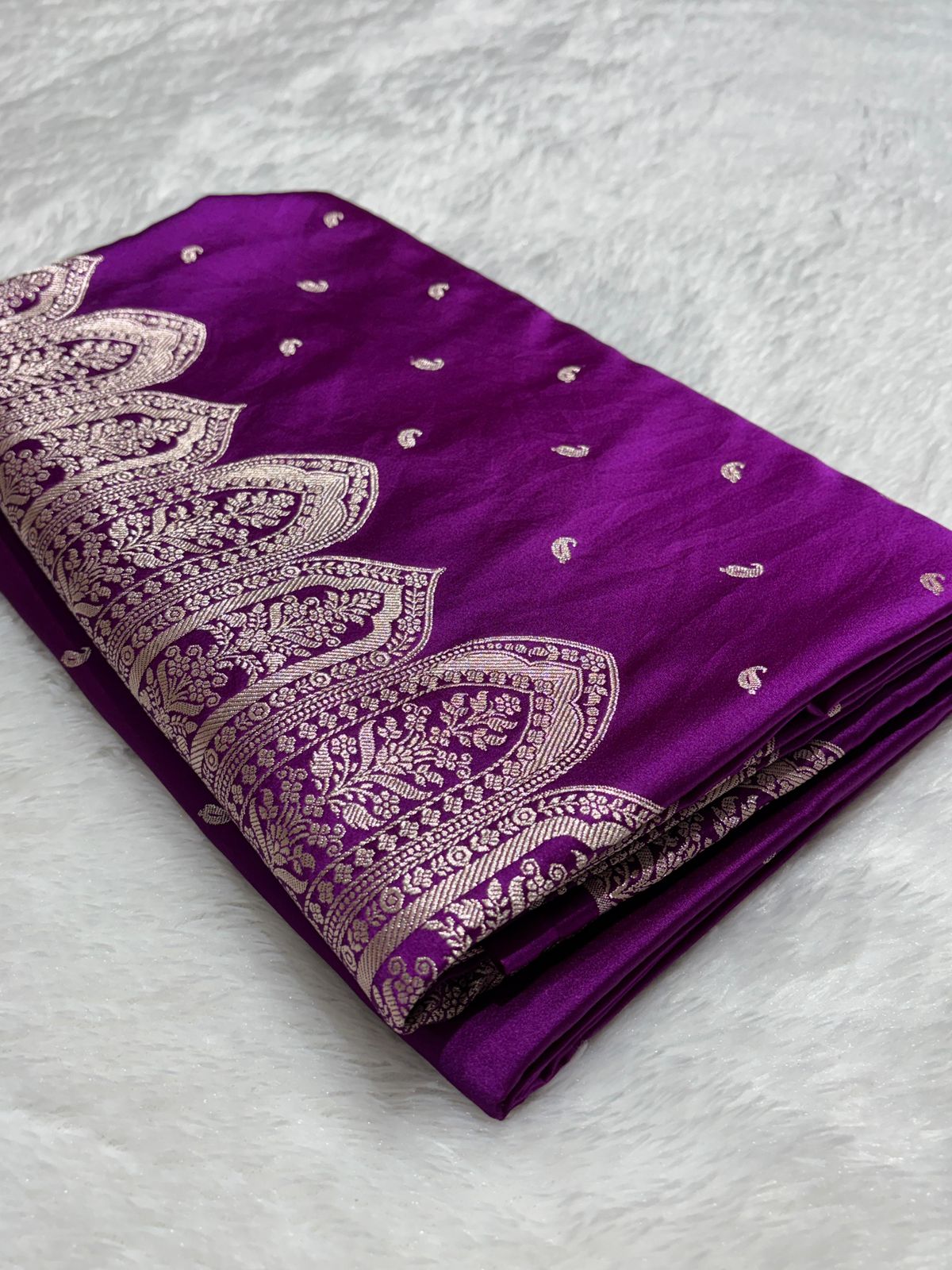
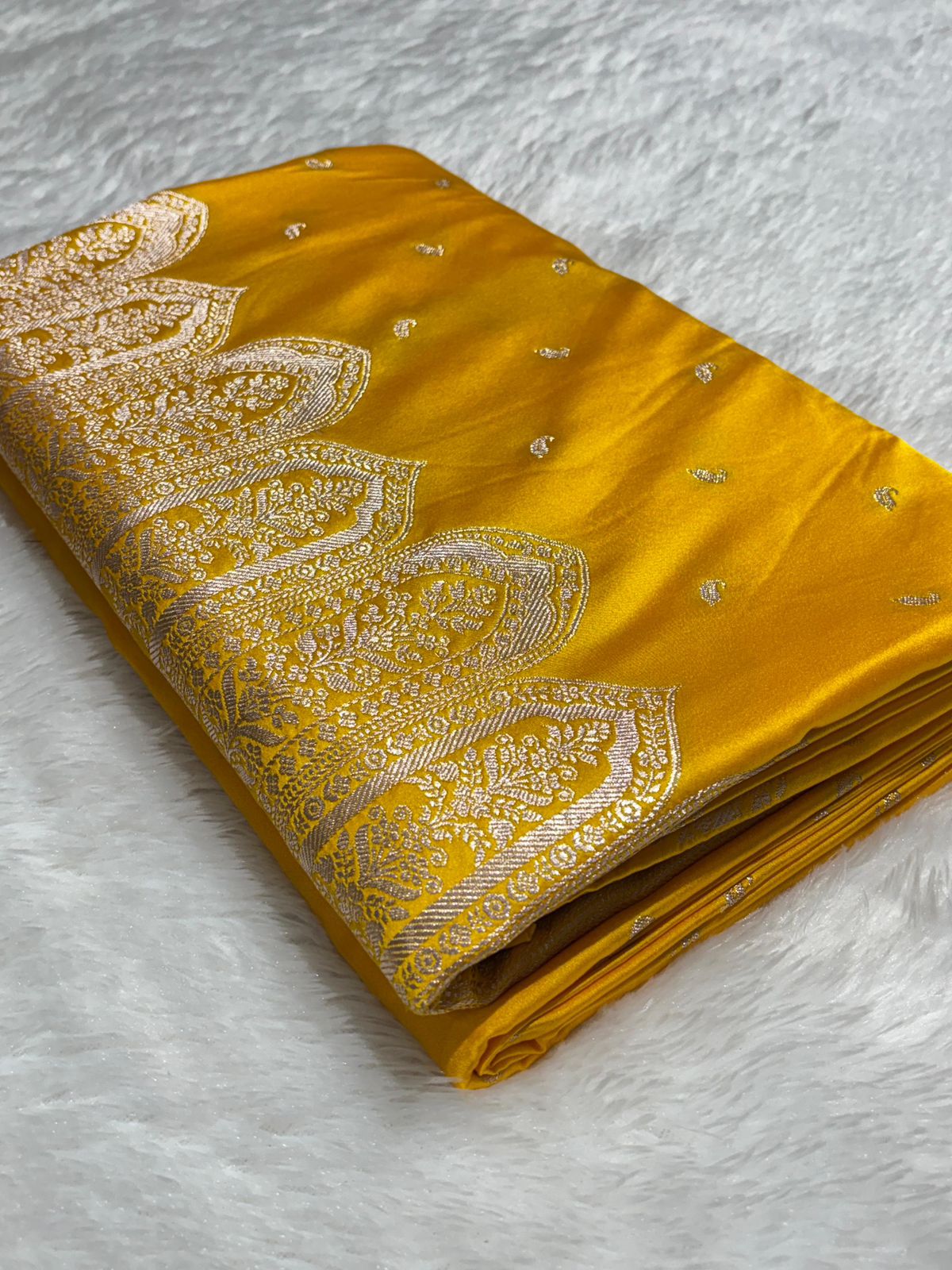
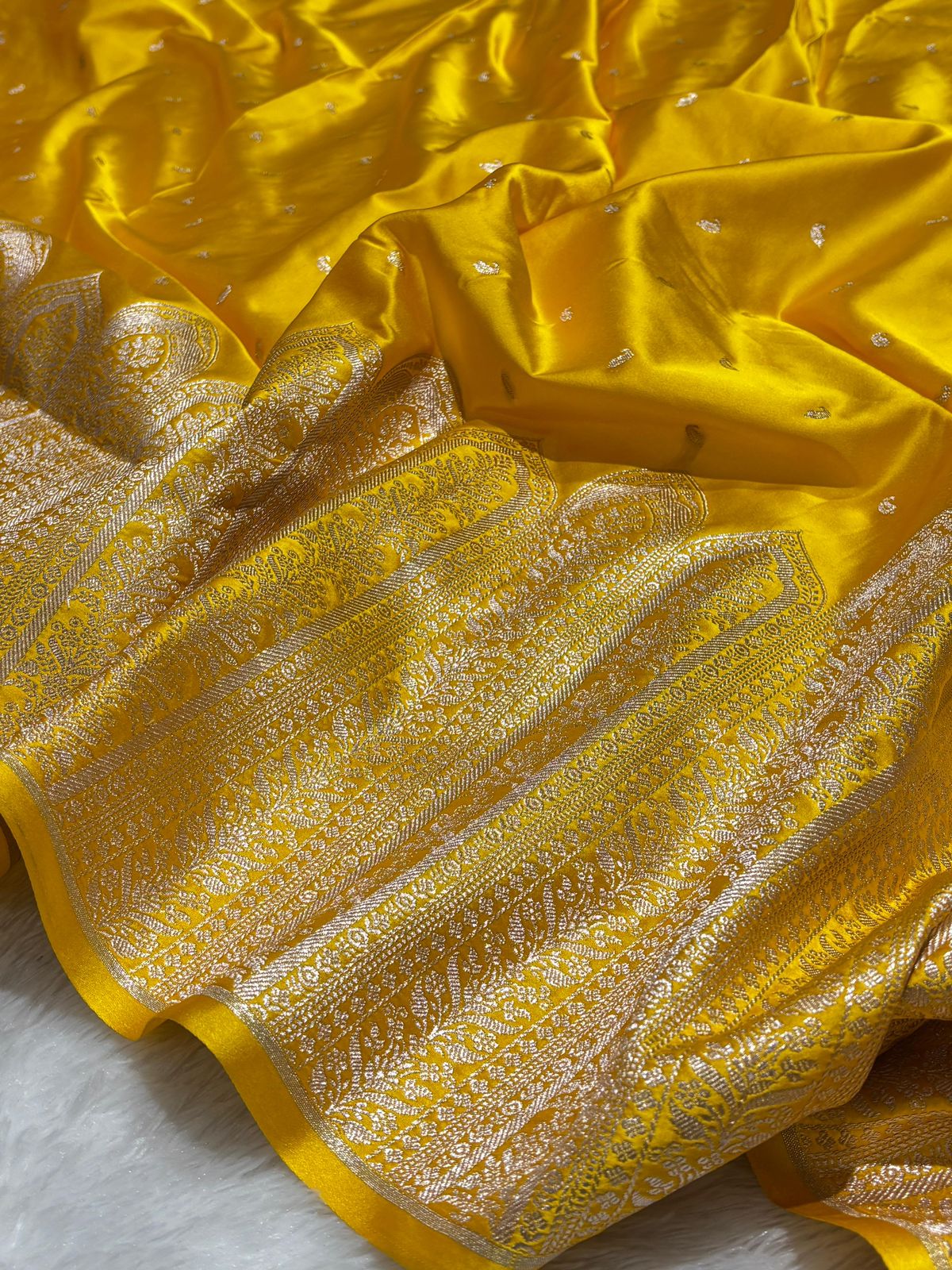
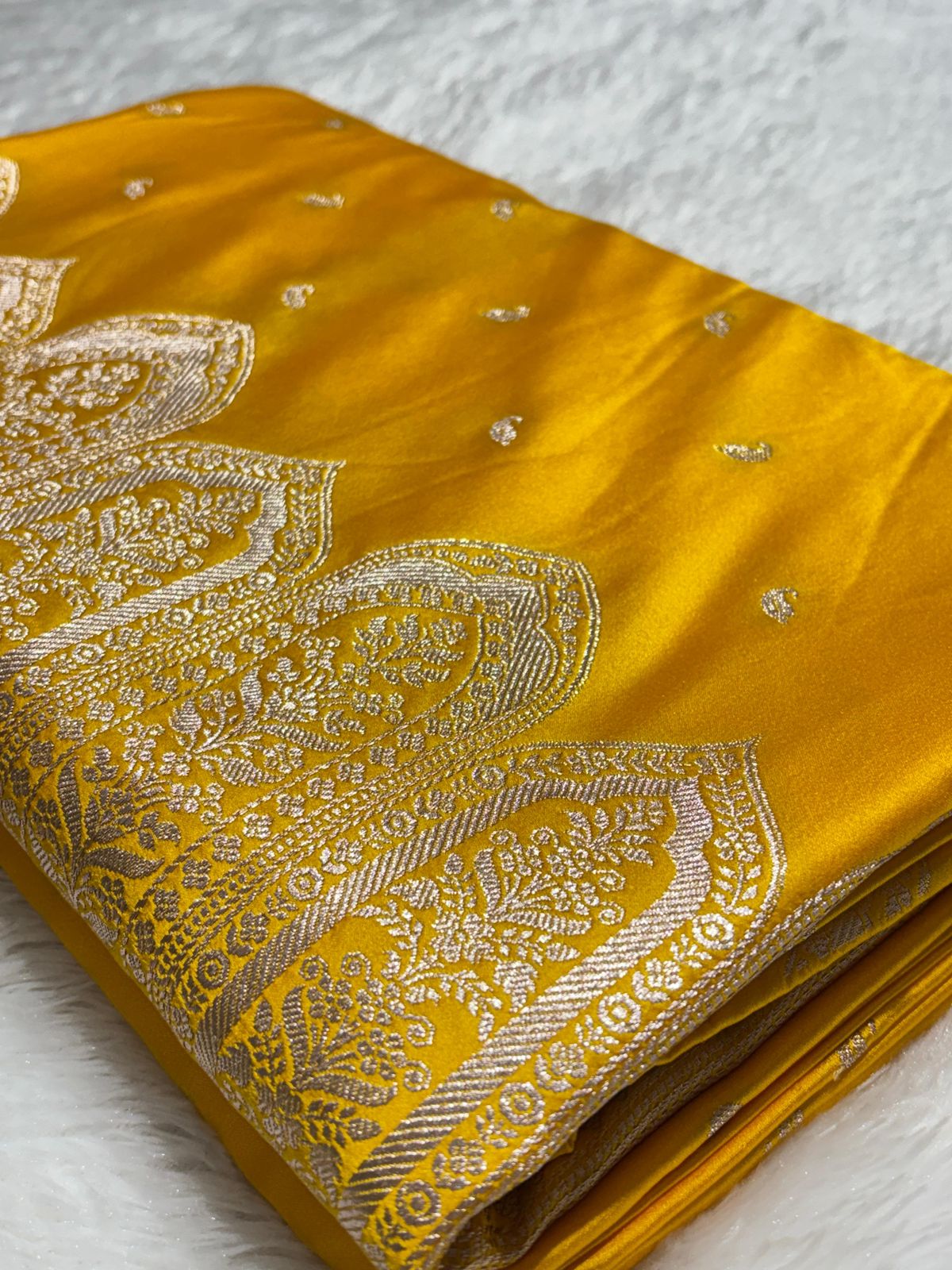
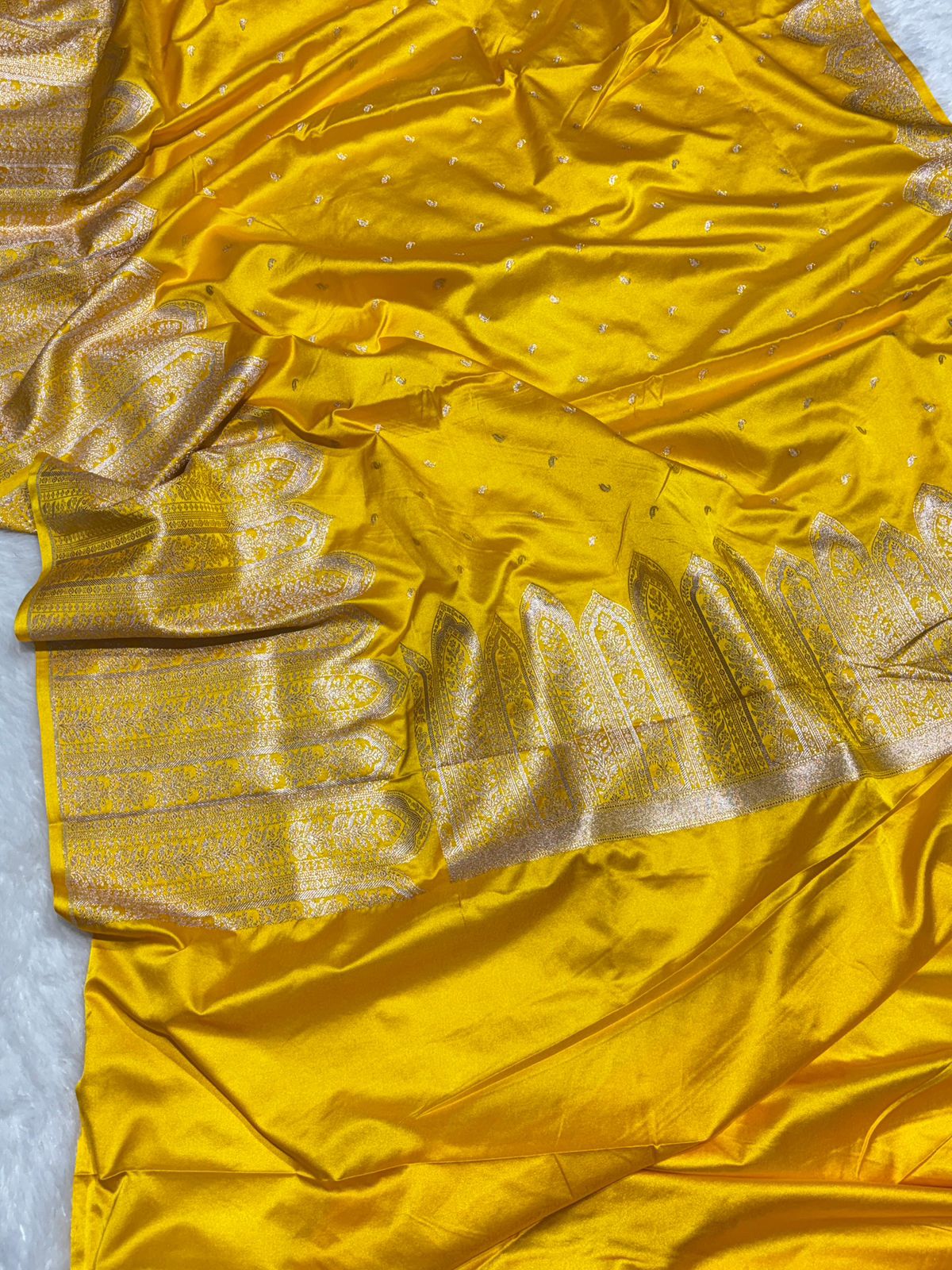
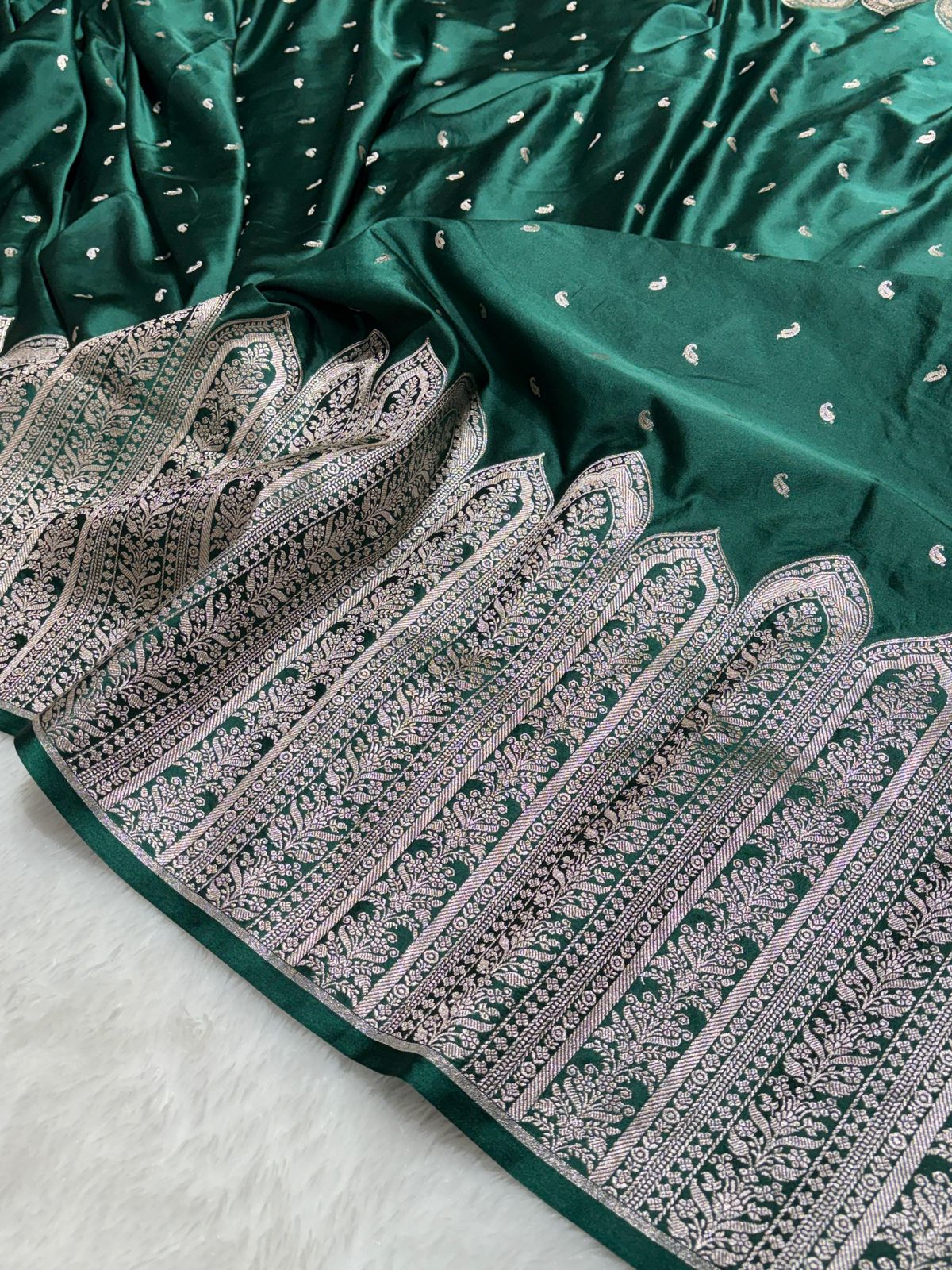
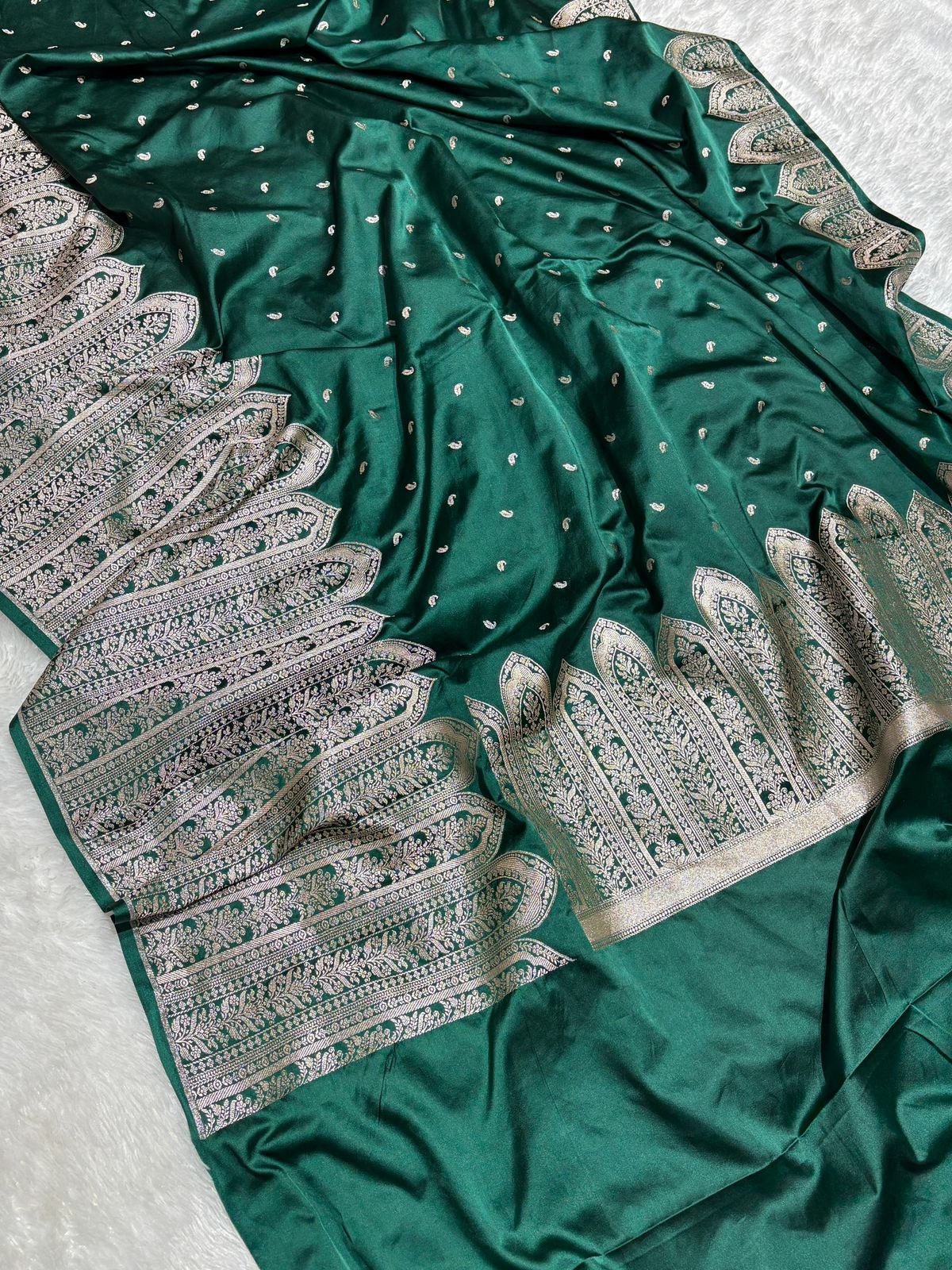
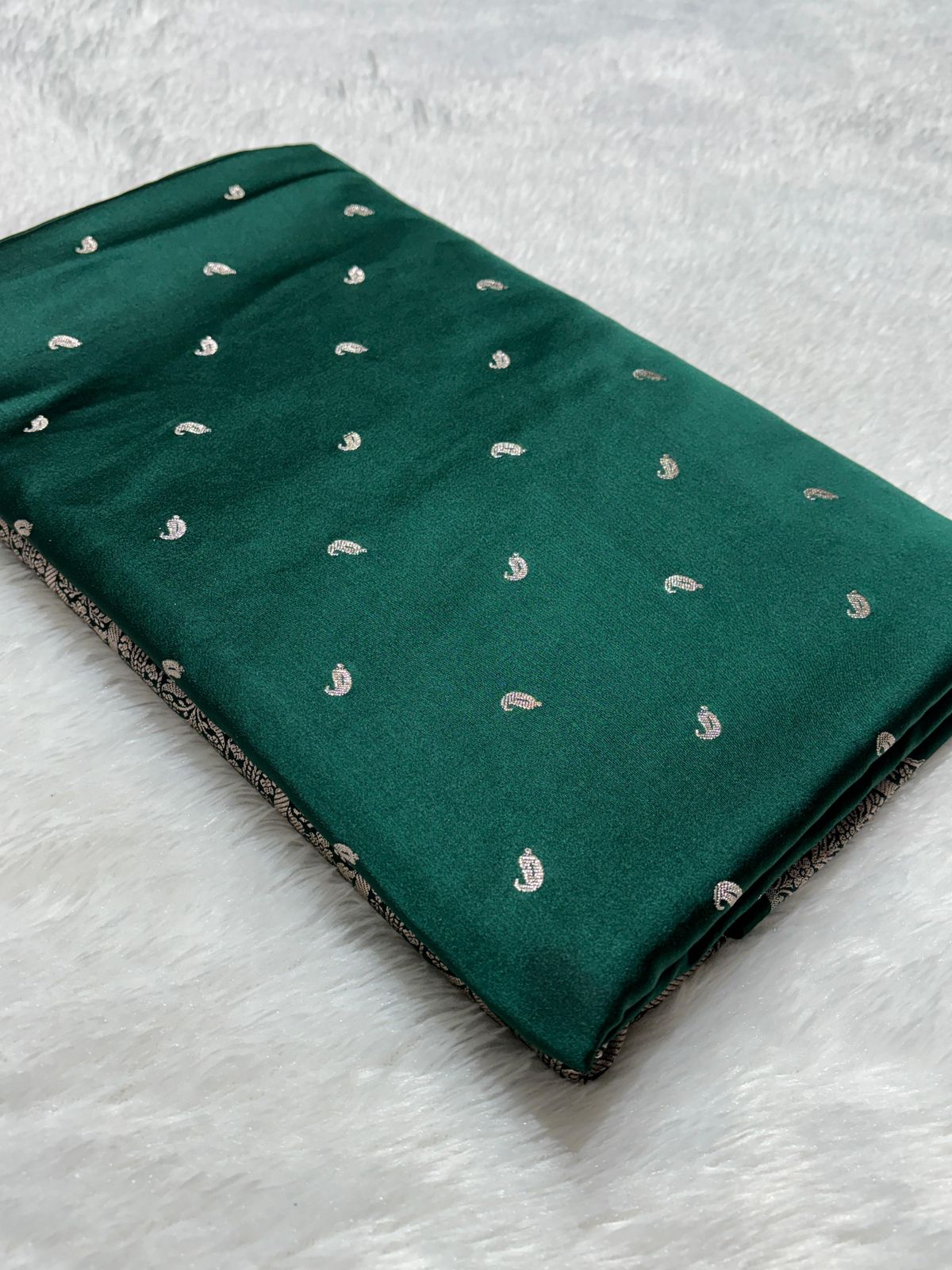
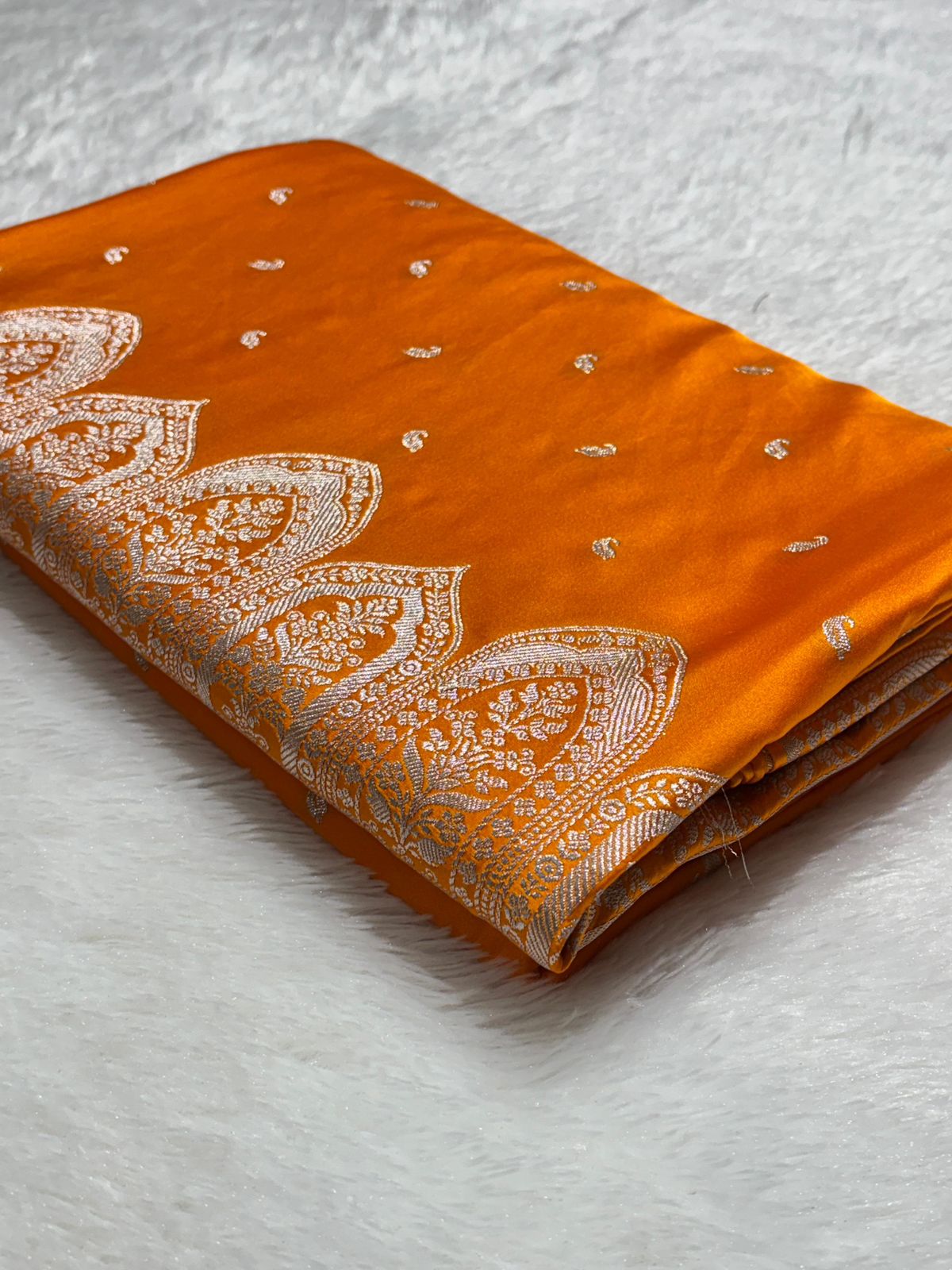
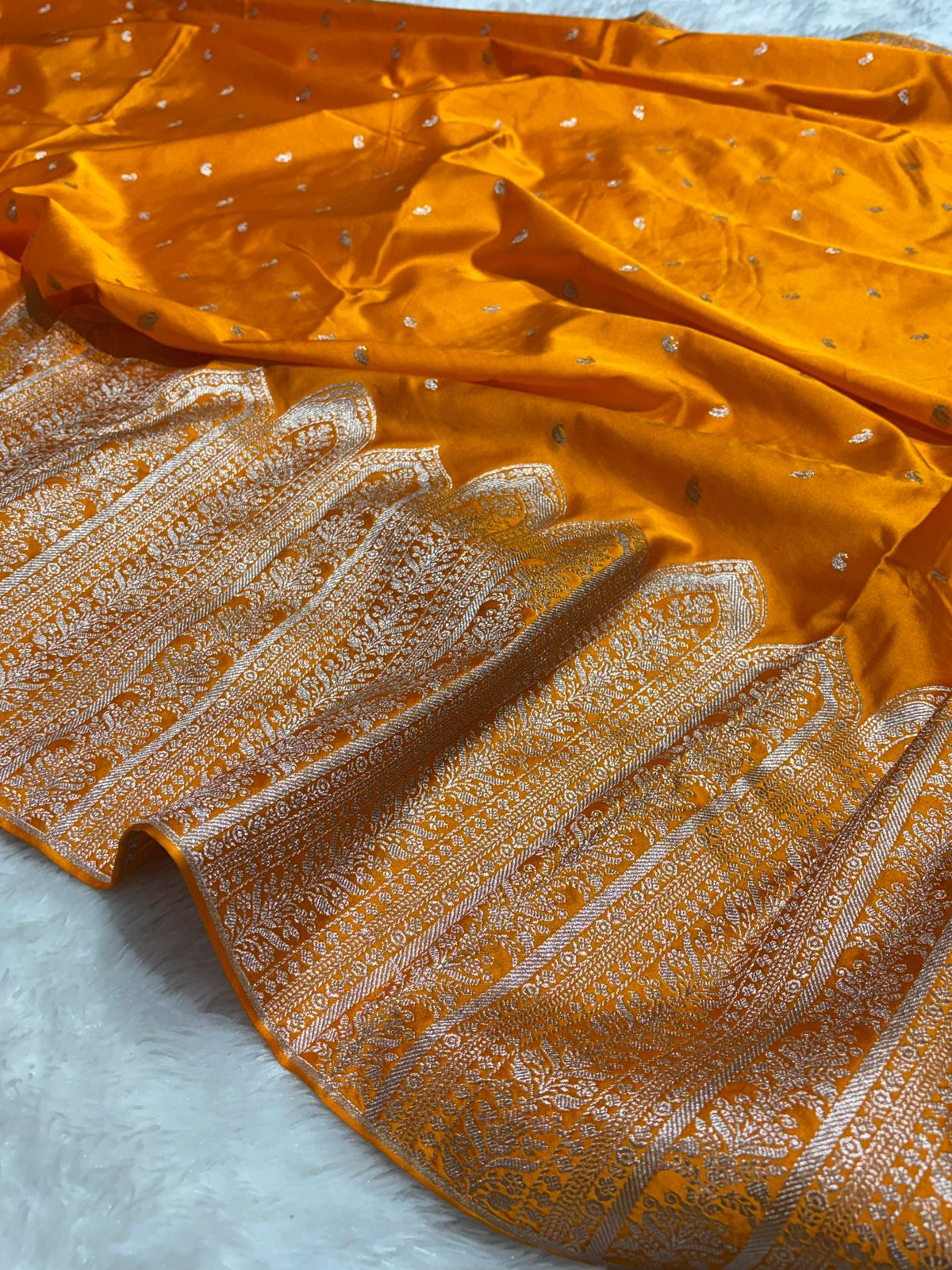
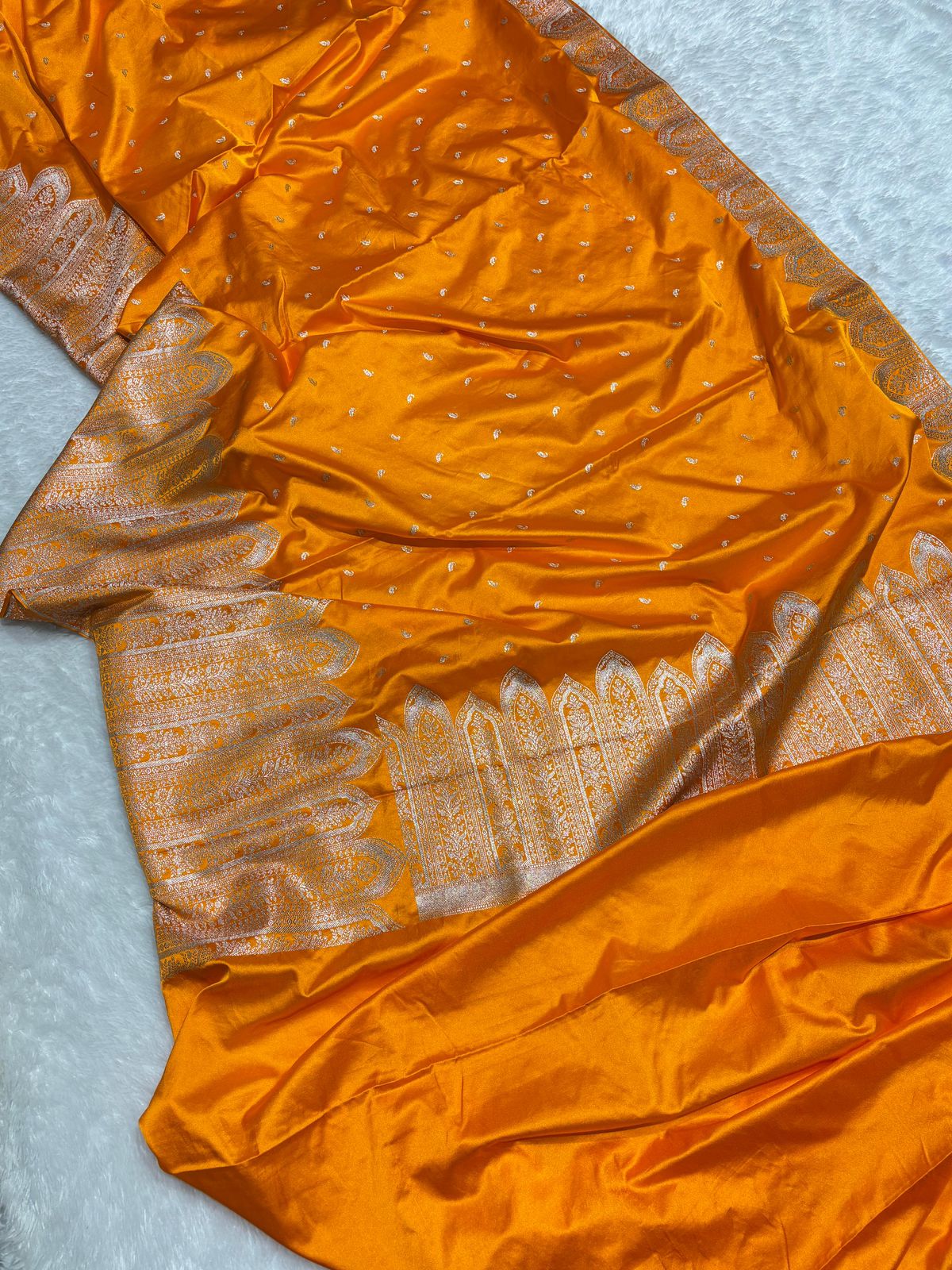
Mashru silk is a fascinating “miracle” fabric that offers the best of both worlds: the opulent, glossy sheen of silk on the outside and the cool, breathable comfort of cotton on the inside.
Here is a guide to why this fabric is so special and what to look for when buying a Mashru silk saree.
1. The Story Behind the Weave
The word Mashru (or Mashroo) comes from the Arabic word for “permitted” or “lawful.” * Historical Origin: It was created in the 16th century for Muslim men, who were prohibited by religious law from wearing pure silk against their skin.
The Solution: Weavers developed a “satin weave” where the silk warp (vertical threads) stays on the surface, while the cotton weft (horizontal threads) stays underneath. This allowed the wearer to look regal in silk without the silk actually touching their body.
Primary Regions: Traditionally crafted in Patan and Mandvi (Gujarat), as well as parts of Rajasthan and Maharashtra (where it is often called Himroo).
2. Key Features & Texture
Dual-Sided: One side is high-shine (silk), and the other is matte and soft (cotton).
Durability: Because it’s a thick, heavy weave (often using 6 to 8 cotton threads for every silk thread), it is much stronger and more durable than pure silk.
Climate-Friendly: It is highly popular in India because the cotton backing absorbs sweat, making it comfortable even in hot, humid weather.
The Finish: After weaving, the fabric is washed and “beaten” with wooden hammers while damp to enhance its characteristic glaze.


Reviews
There are no reviews yet.