
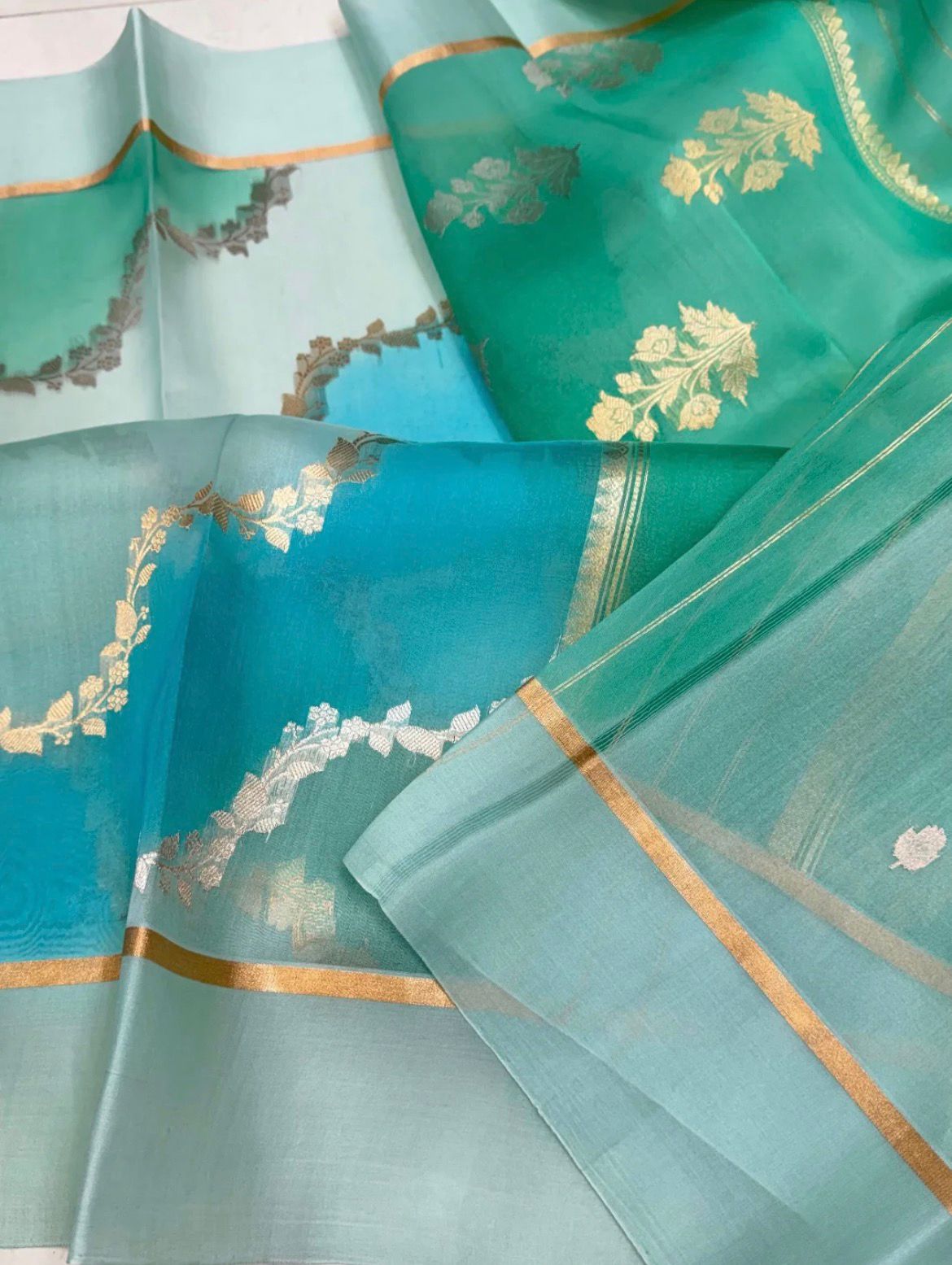
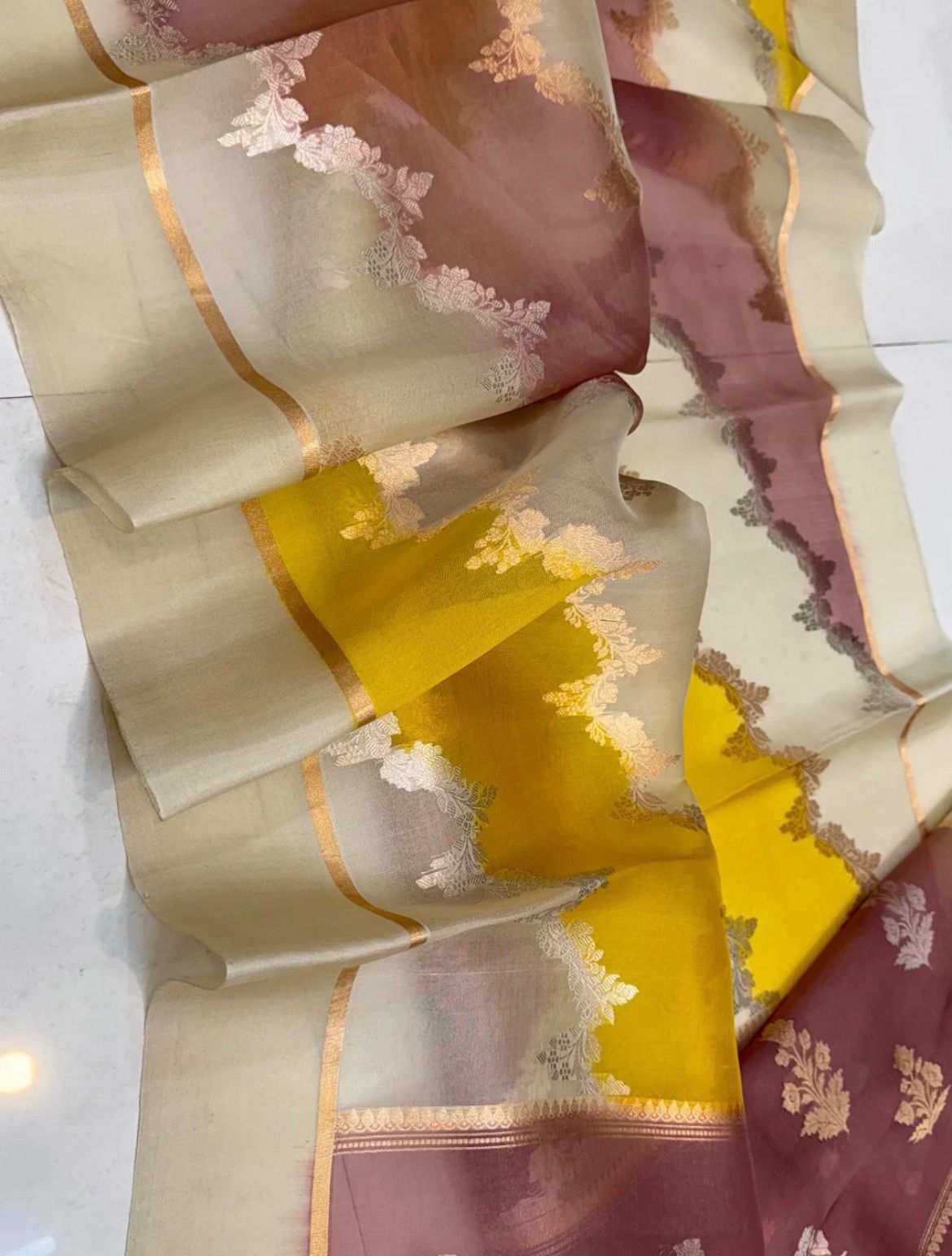


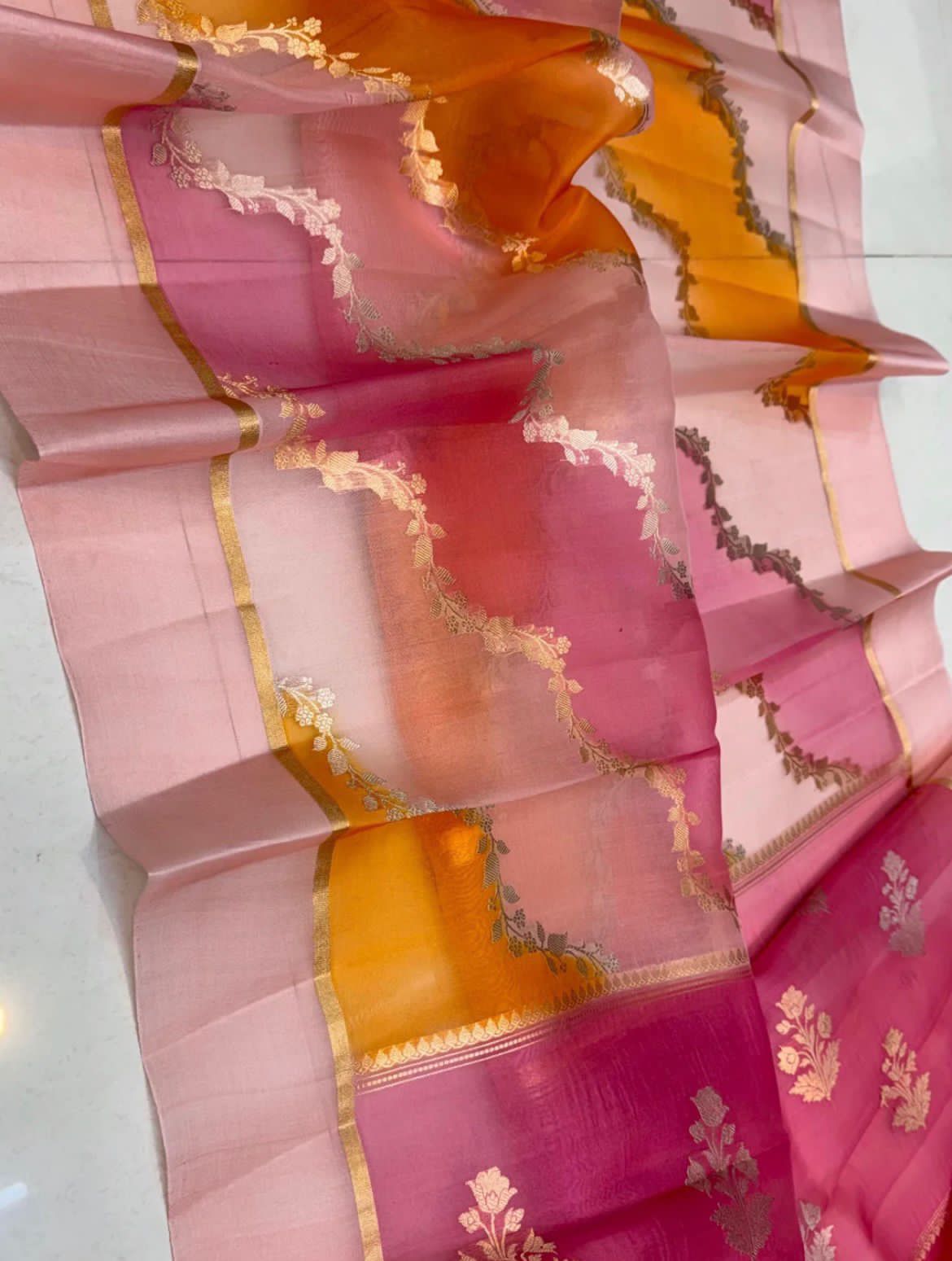
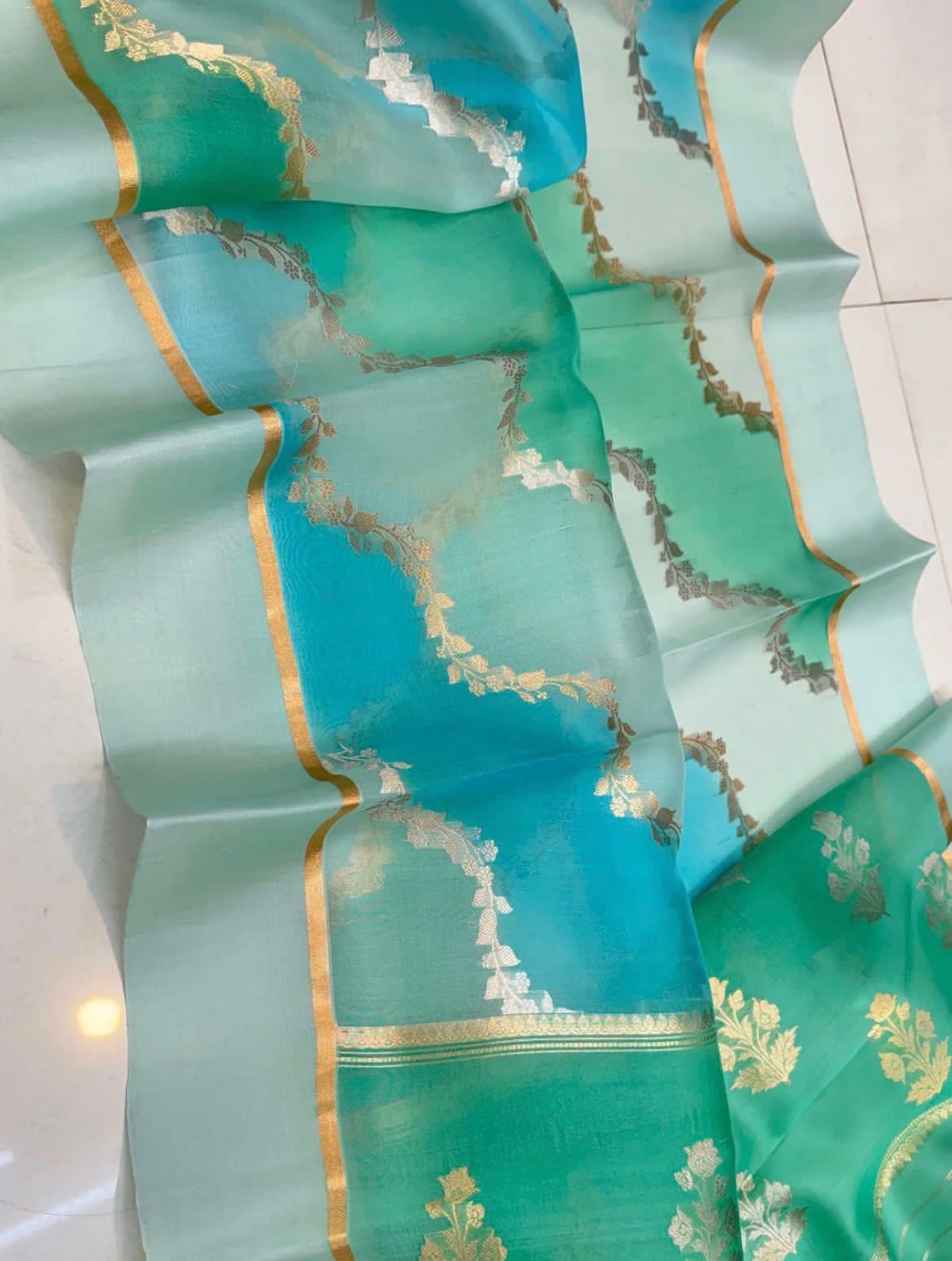
A Pure Banarasi Handloom Kora Silk saree with Kadhua Aada work is essentially the “haute couture” of the ethnic world.
1. The Fabric: Kora Silk (Organza)
Kora silk is the Banarasi term for pure organza. It is made by using silk yarns that haven’t been de-gummed, resulting in a fabric that is:
Crisp and Sheer: It has a natural stiffness that creates a regal, structured silhouette.
Lightweight: Unlike heavy katan silk, Kora is breathable and easy to carry for long events.
Translucent: It has a subtle, ethereal shimmer that catches the light beautifully.
2. The Technique: Kadhua Weaving
The Kadhua (or Kadwa) technique is the hallmark of true handloom luxury.
Individual Motifs: Unlike the faster “Phekwa” (cutwork) method, each motif in Kadhua is woven individually into the fabric.
No Loose Threads: If you turn the saree over, there are no floated threads or “cut” ends. The back is as clean as the front.
Labor Intensive: It can take several weeks—sometimes months—for a weaver to complete a single Kadhua saree because of the manual precision required for every floral or geometric booti.
3. The Pattern: Aada (Slanting/Diagonal)
Aada refers to the diagonal patterns running across the body of the saree.
Visual Appeal: This “leheriya” style layout is incredibly flattering as it creates an illusion of height and fluidity.
Complexity: Weaving diagonal patterns on a handloom is significantly more difficult than vertical or horizontal stripes, as the weaver must shift the warp and weft alignment meticulously.


Reviews
There are no reviews yet.