
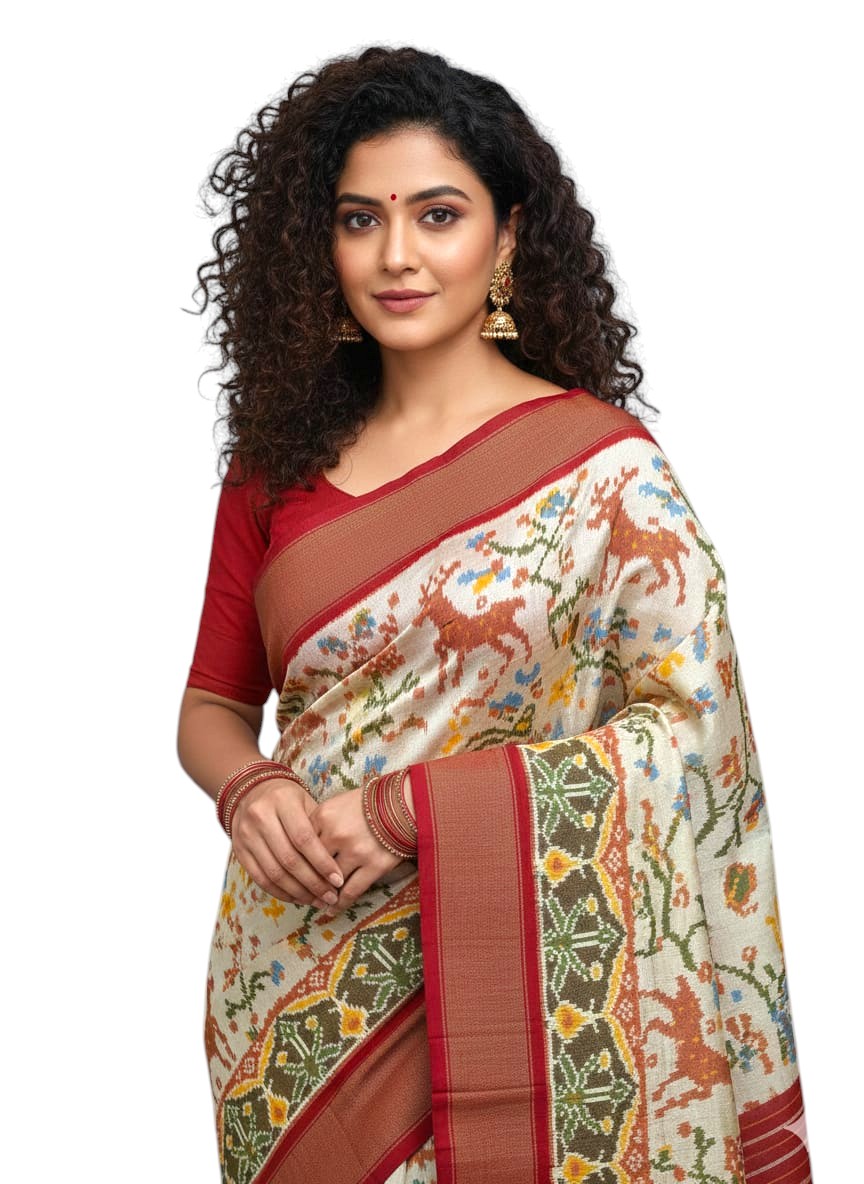
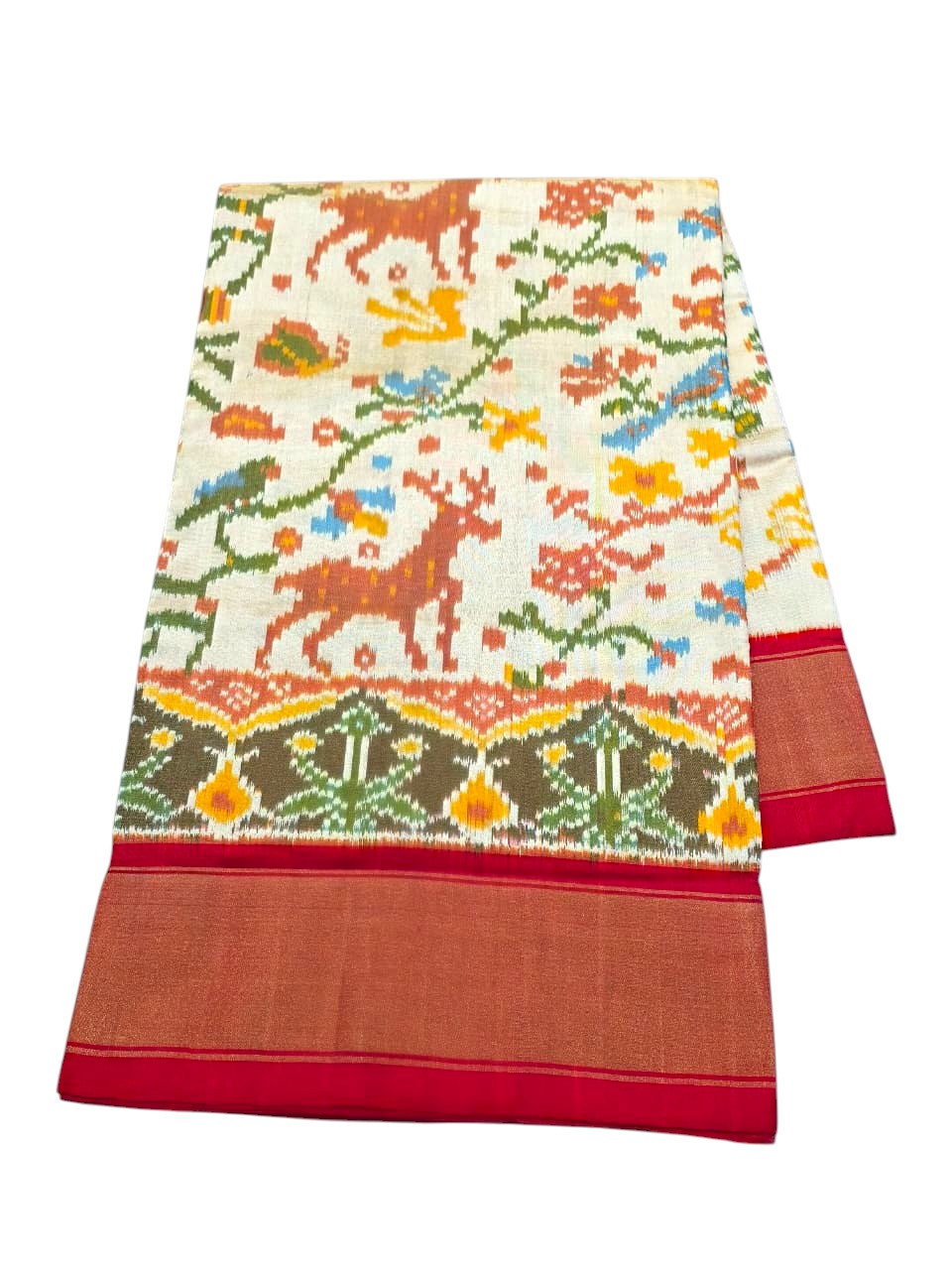
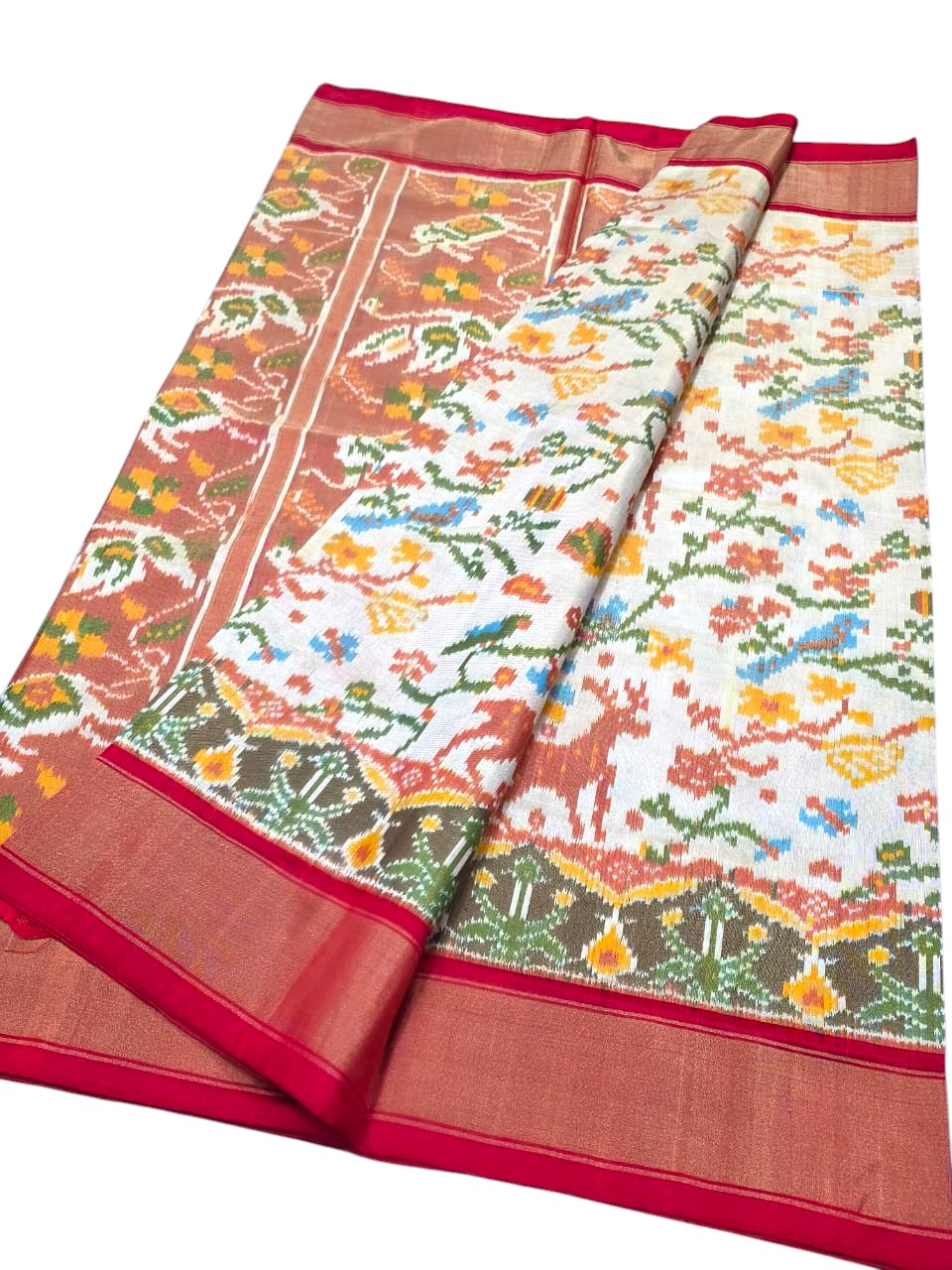
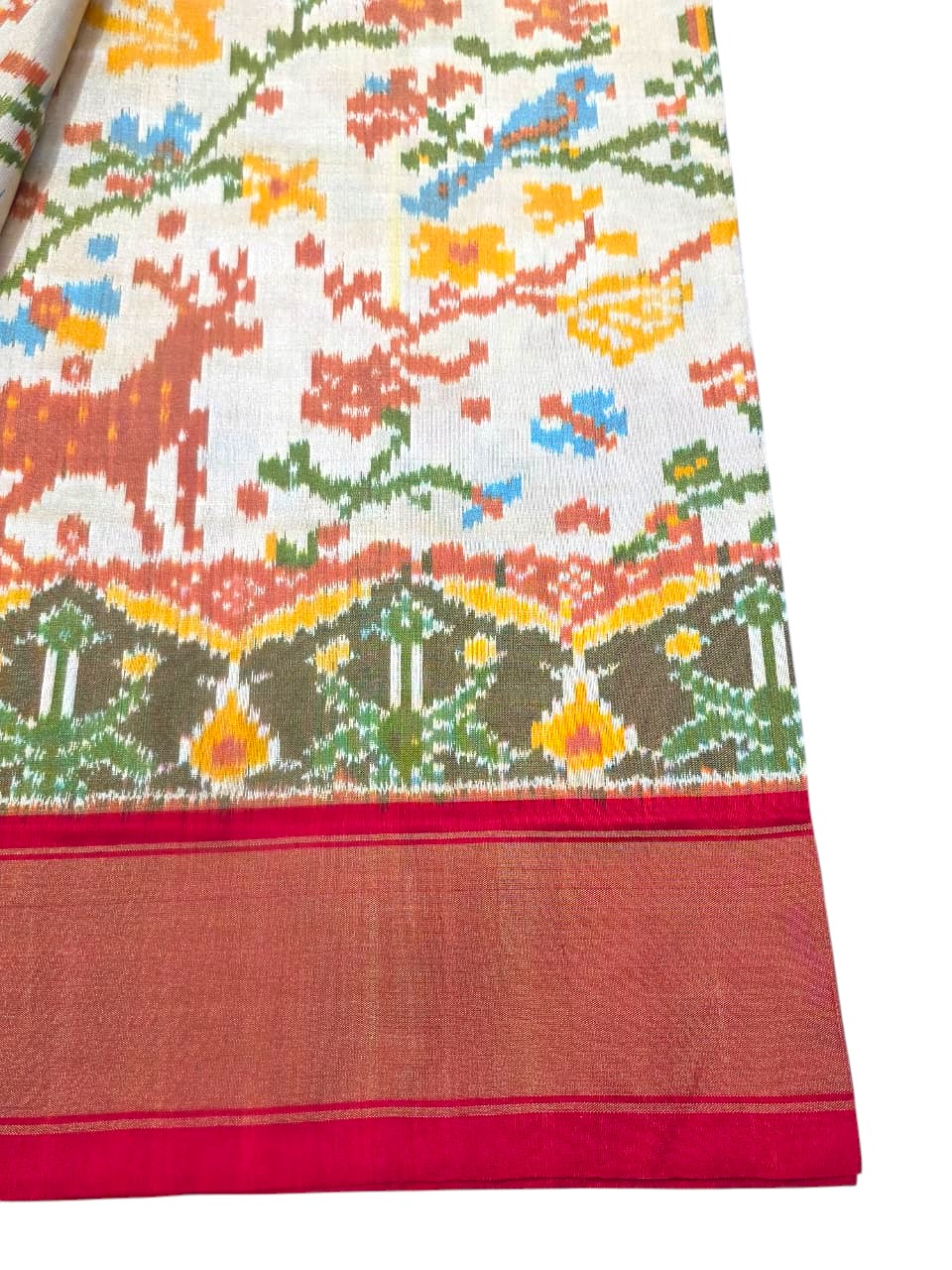
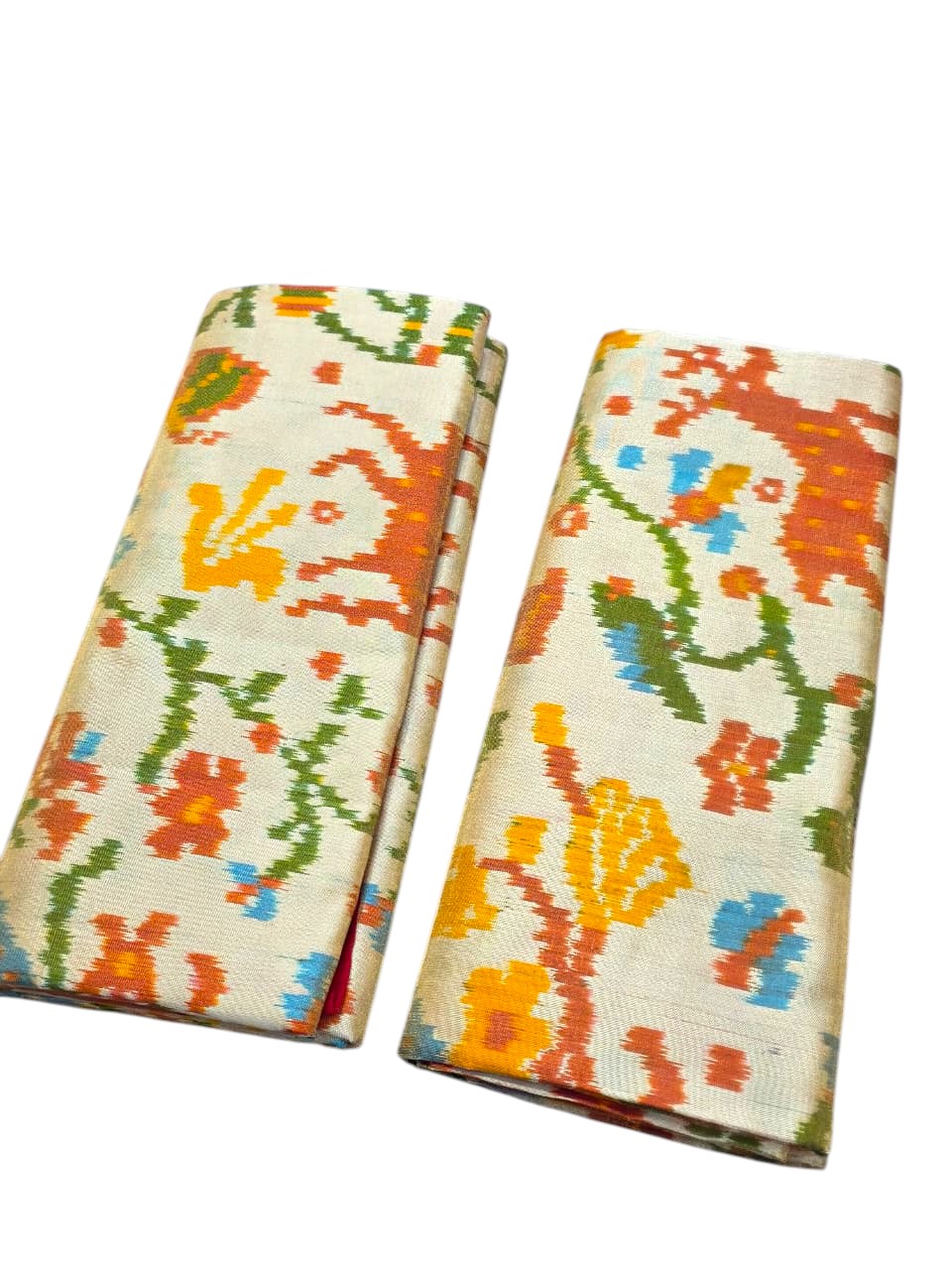
A Pochampally Double Ikkat Full Tissue Silk Saree is one of the most technically difficult and luxurious handloom sarees in India. It combines the extreme precision of “Double Ikkat” weaving with the opulent shimmer of “Full Tissue” fabric.
Here is why this saree is considered a masterpiece of Telangana’s textile heritage:
1. The Weave: Double Ikkat (Patola Style)
The Technique: In a Double Ikkat, both the warp (vertical) and weft (horizontal) yarns are tie-dyed with absolute precision before they even touch the loom.
The Difficulty: The weaver must align these pre-dyed threads perfectly during the weaving process so they intersect to form a sharp, geometric motif.
Reversibility: A true Double Ikkat saree looks identical on both sides. If the pattern is blurry on the back, it is likely a Single Ikkat or a print.
2. The Material: Full Tissue Silk
Composition: While standard silk sarees use silk threads for both warp and weft, a “Full Tissue” saree replaces one or both sets of threads with metallic Zari (typically gold or silver-coated silk).
The Look: The result is a saree that looks like it is made of liquid metal. It has a high-gloss, radiant shimmer that makes it glow under evening lights.
Texture: Tissue silk is slightly stiffer and more structured than pure soft silk, giving the saree a “royal” drape that stays in place.
3. Key Characteristics
Geometric Precision: Unlike the floral motifs of Banarasi or Kanchipuram, Pochampally is famous for its sharp, mathematical, and abstract geometric patterns (diamonds, squares, and chevrons).
Lightweight Luxury: Despite its metallic appearance, high-quality Tissue Silk is surprisingly lightweight compared to heavy Katan or Kanchi pattu sarees.
GI Tag: Authentic Pochampally sarees carry the Geographical Indication (GI) tag, ensuring the craft remains protected and authentic to the Bhoodan Pochampally region.


Reviews
There are no reviews yet.