

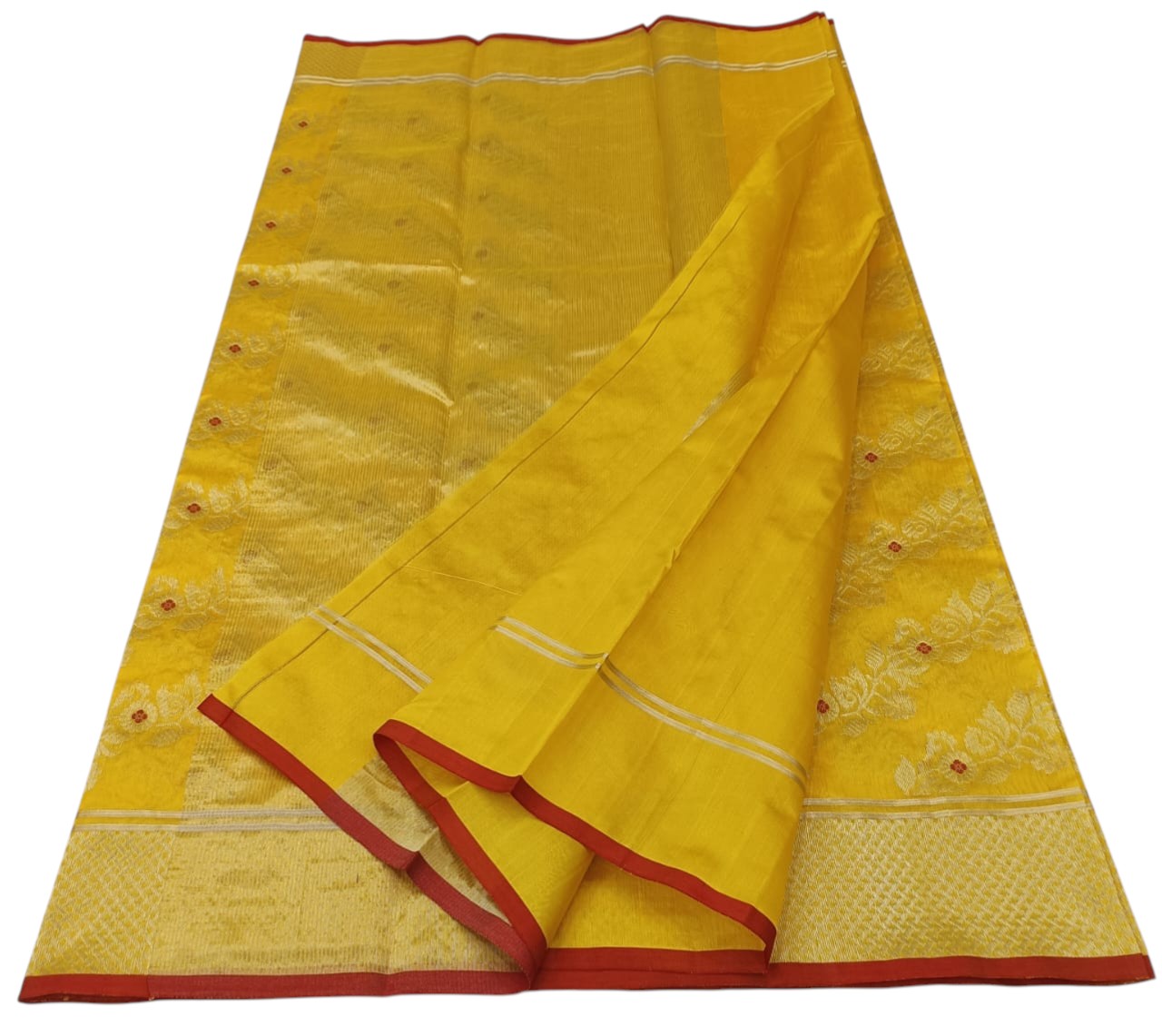
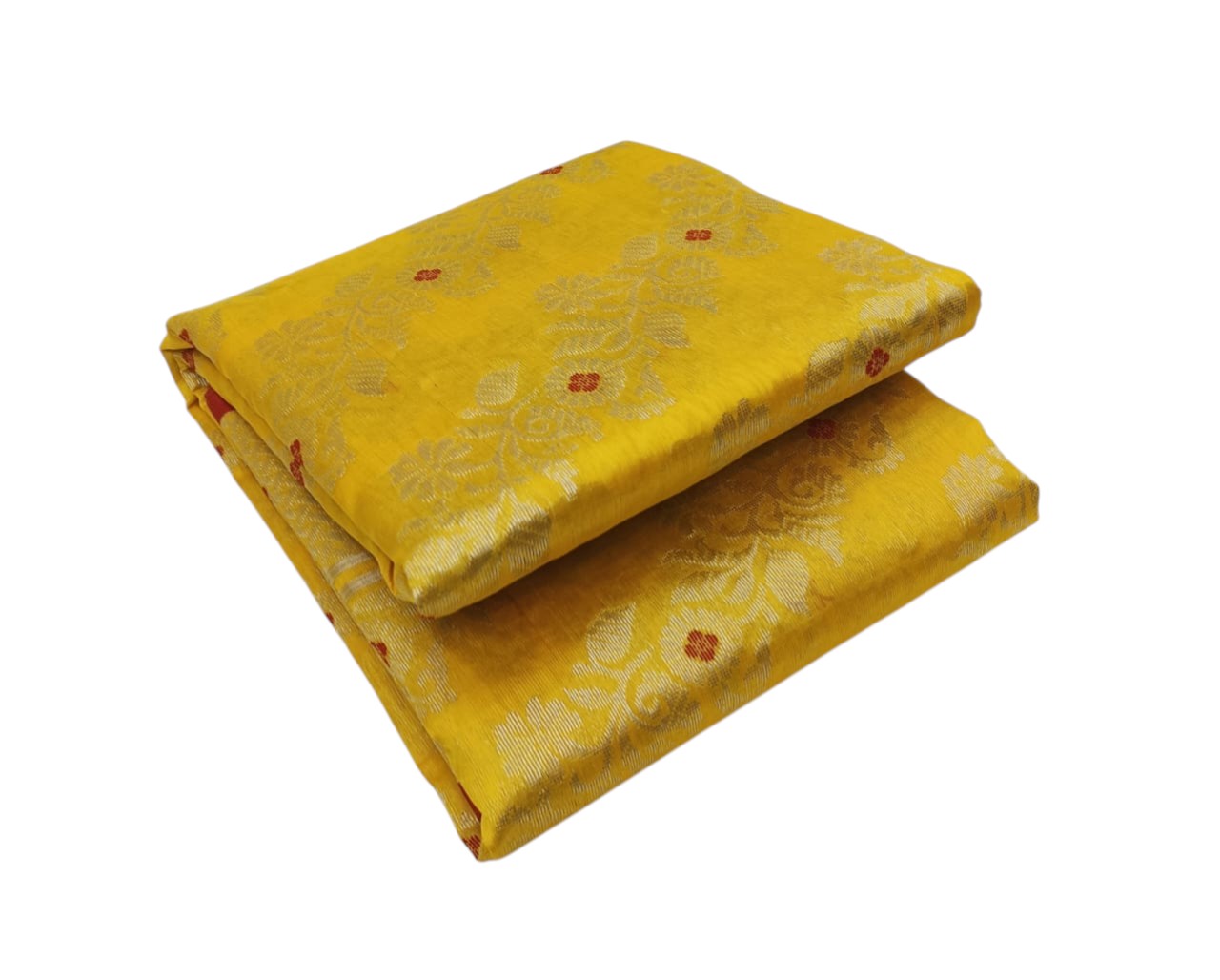
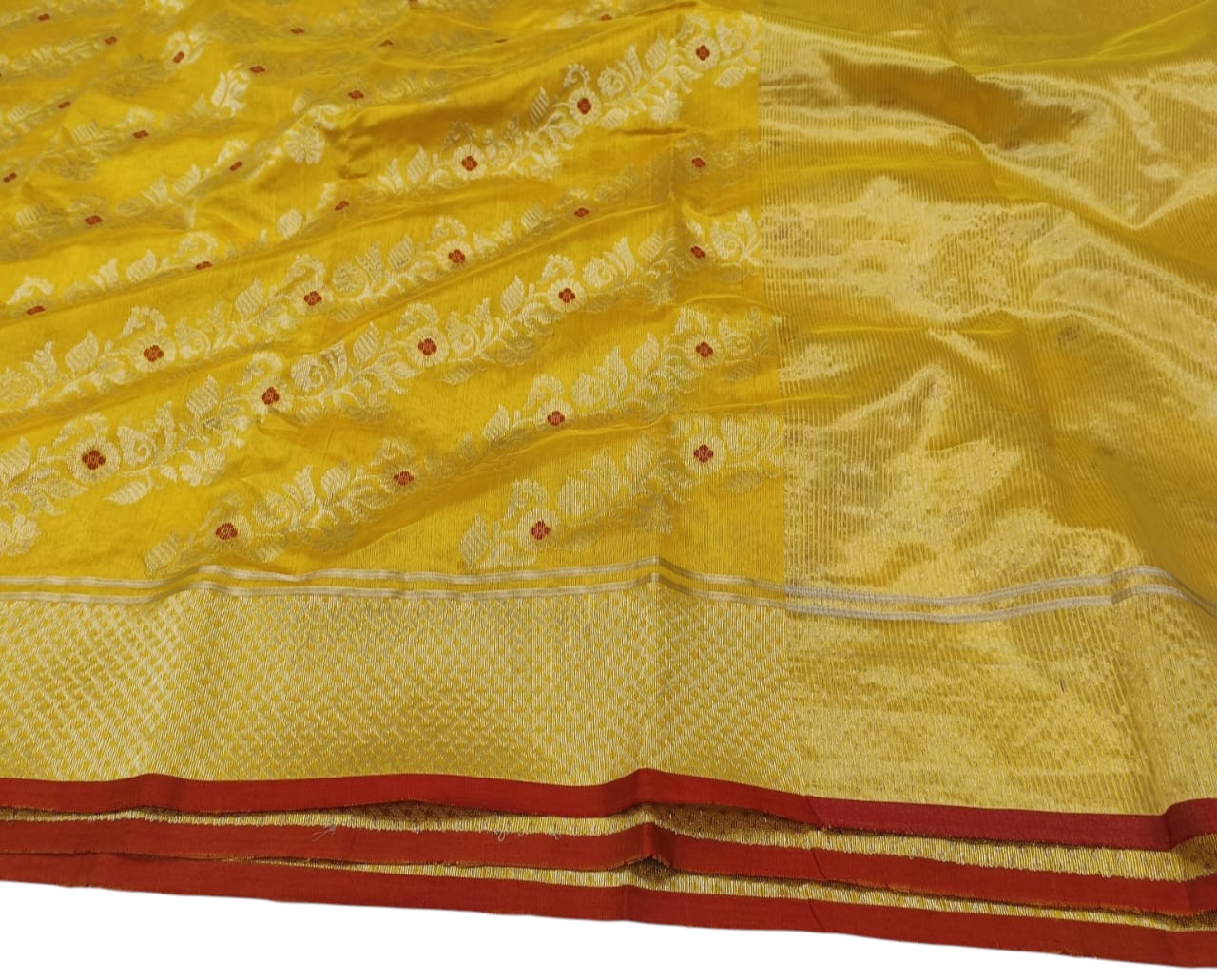
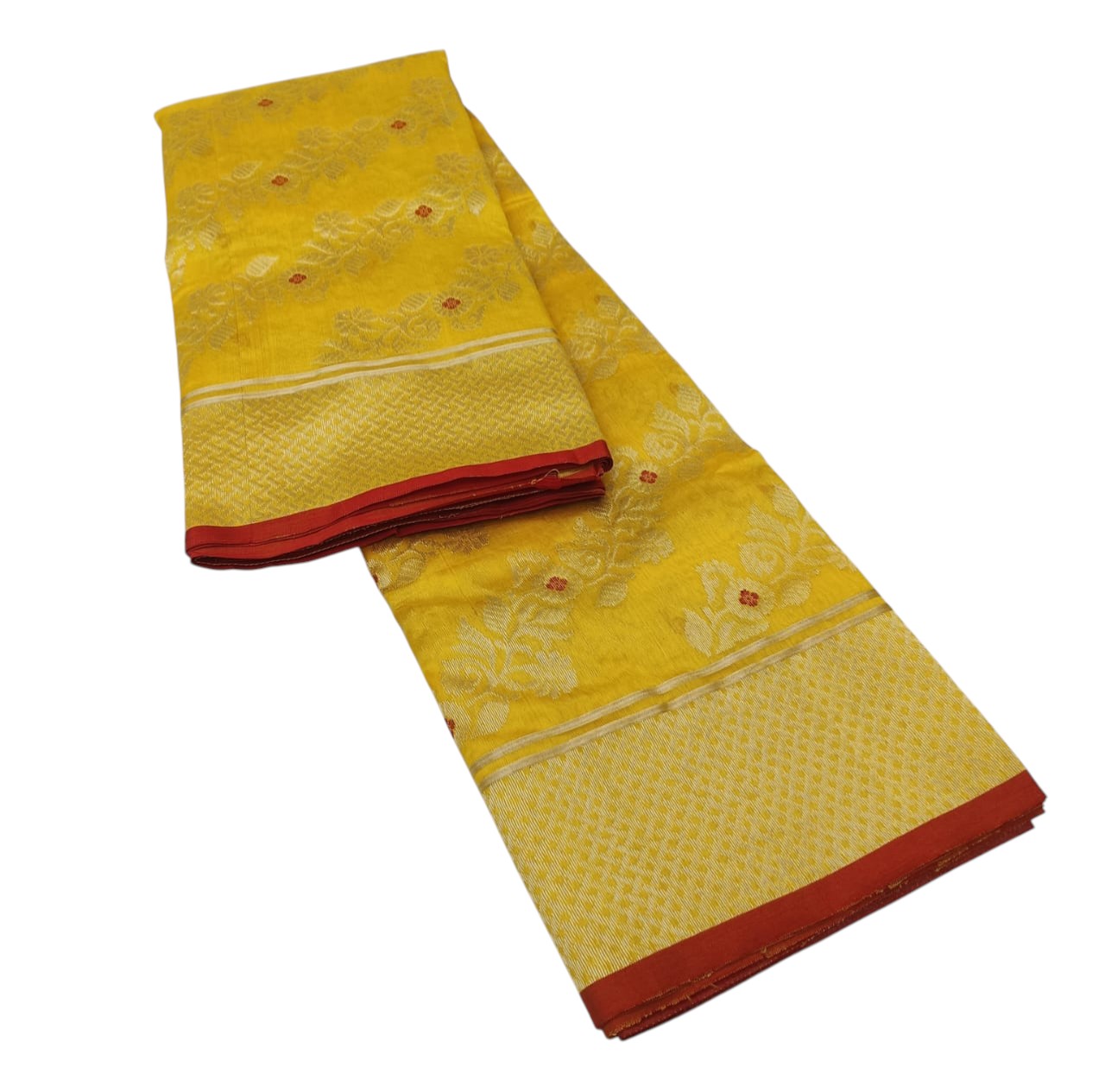
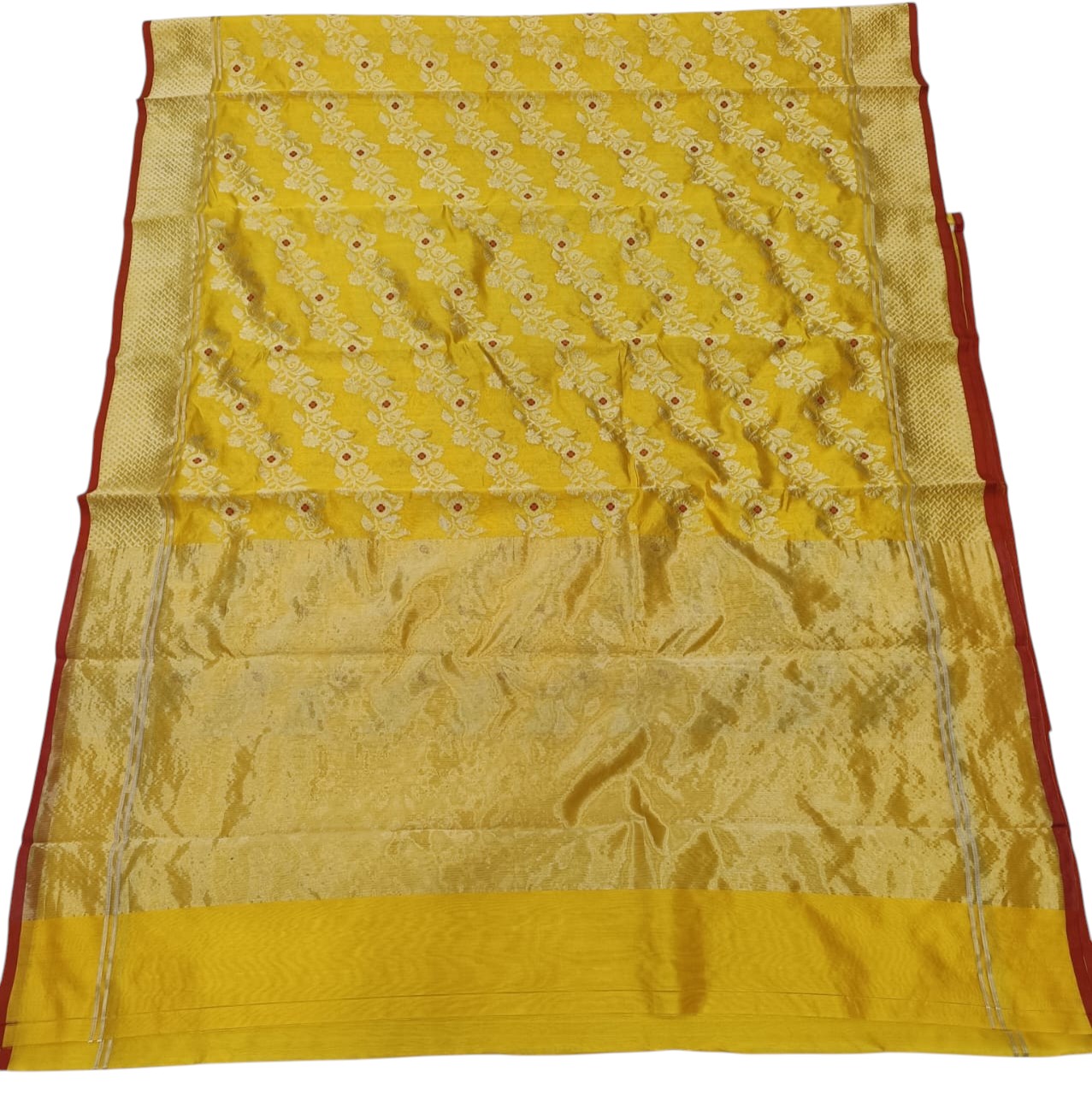
Pure Chanderi Pattu with Meenakari Jaal—is a masterpiece of textile fusion. You are essentially taking the legendary lightness of Chanderi and decorating it with the most complex technique of Banaras: the Meenakari.
In 2026, this “Soft Silk” variant is highly sought after because it offers the “Maharani” look without the restrictive weight of a traditional heavy silk saree.
The Fine Details of Your Selection
- The Fabric (Pattu Soft Silk): Unlike the sheer “Kora” you were looking at earlier, this is a Pattu (Silk) base. It is opaque, incredibly soft to the touch, and has a fluid drape that flows with your movement. It combines the strength of Chanderi silk threads with a “soft-finish” processing.
- The Meenakari Jaal: This is the star of the saree. “Meenakari” involves weaving colored silk threads (Resham) into the golden zari motifs.
- Imagine a golden vine (the Jaal) where the flowers are woven in shades of pink, turquoise, or green.
- Because it is Hand Weaving, each color change in the flower requires the weaver to manually twist a different colored thread into the loom.
- The Border & Strip Pallu: A Golden Zari Border provides a structured frame, while the Strip Pallu (often featuring Tircha or horizontal zari lines) is a hallmark of authentic Chanderi. It’s elegant, understated, and balances the “busy” nature of the all-over Jaal.
Why this Saree is Unique
- Technique (Kadwa/Kadhua): Since you mentioned hand-weaving, this is likely done using the Kadwa technique. Each Meenakari flower is woven individually. There are no loose threads on the back (unlike the Phekwa/cutwork technique), making it more comfortable and high-end.
- Versatility: The “Soft Silk” base makes it appropriate for both morning weddings (due to the Chanderi heritage) and grand evening receptions (due to the heavy Golden Jaal).


Reviews
There are no reviews yet.